

RIP Clive Davis – How He Built an Empire and Changed Pop Culture Forever
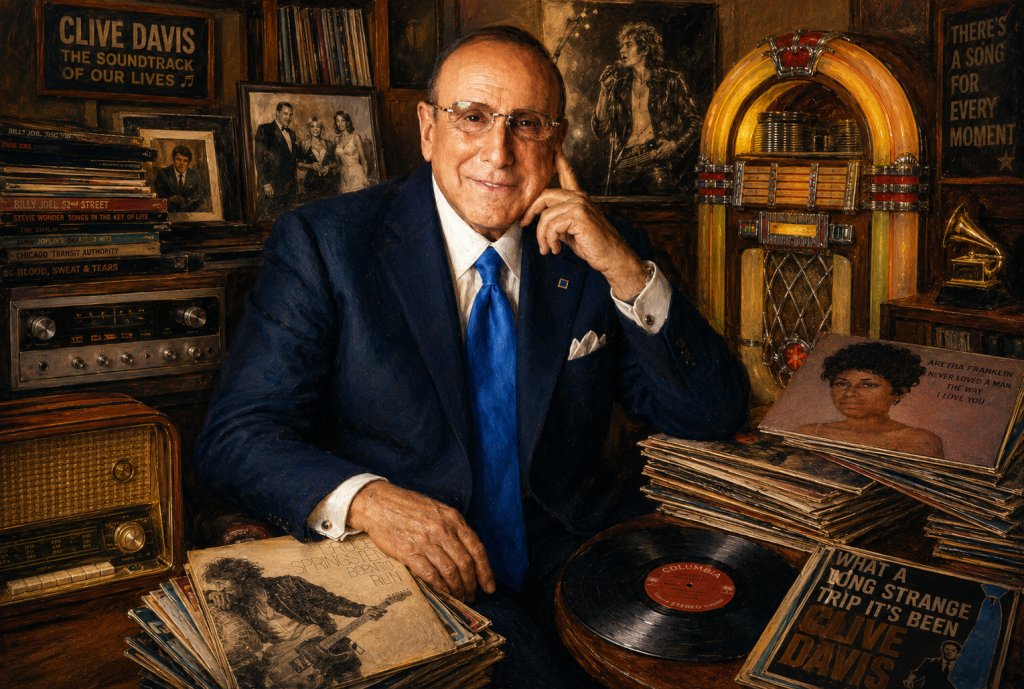
Say his name out loud – Clive Davis.
You may already know the music. You might know the unforgettable lyrics. You perhaps know the legendary voices.
Most people remember exactly where they were the very first time a specific song played on the radio and seemed to understand exactly what they were experiencing.
But there is a very high chance the average listener does not know the full story of the visionary who worked tirelessly behind the scenes to make that music a reality.
Clive Davis, the iconic, impeccably dressed music executive who steered the careers of artists ranging from Janis Joplin to Whitney Houston, passed away Monday at his home in Manhattan.
Variety confirmed the legendary producer’s passing at 94 years old.
While no official cause of death was initially cited, reports noted the music mogul had recently spent time in the hospital dealing with upper respiratory problems.
Family members confirmed the heartbreaking news in a touching social media post.
Relatives remembered the famous executive not just as a towering figure who altered the course of music history, but simply as a beloved patriarch who led the family with grace, generosity, and incredible kindness.
This journey is the ultimate outlier in the chaotic world of entertainment. The Brooklyn native did not start out as a teenage musical prodigy. The future executive did not grow up playing in struggling garage bands.
There were no deep Hollywood family connections to rely upon. Clive Davis was simply a lawyer from New York.
Yet, against all odds, this legal mind became known globally as the man with the “golden ears.”
Clive Davis shaped the landscape of pop culture for over fifty years.
The music mogul trusted deep instincts, survived industry scandals, outlasted corporate mergers, and always came back stronger.
This is the incredible story of how a young professional who thought life would consist of reviewing legal contracts ended up writing the literal soundtrack to our lives.
The Unlikely Beginning: From Brooklyn to the Boardroom
Clive Davis never planned on a life in the music business. The young student did not spend hours dreaming of record deals or Grammy stages.
Born and raised in Brooklyn, New York, immense tragedy struck early on. Both parents passed away while the future executive was still in late adolescence. Despite this massive, grounding loss, giving up was never an option. The driven teenager threw every ounce of energy into education, earned admission into a prestigious university, and eventually graduated from Harvard Law School.
Law became the chosen profession. It was safe. It was respectable. The legal field was incredibly stable. For a young man who had lost his parents so early, stability held immense appeal.
In 1960, a job opened in the legal department at Columbia Records. At the time, Columbia stood as a highly traditional, somewhat stuffy record label.
Columbia focused heavily on easy listening music, Broadway show soundtracks, and established, conservative pop singers.
Their business model was successful, but the artistic output was definitely not cutting-edge.
Five years later, a sharp mind and relentless work ethic propelled the ambitious lawyer to the very top of the legal department. Shortly after that milestone, management made a surprising decision.
Executives named Clive Davis President of the entire label.
Suddenly, a lawyer was running a major, historically significant record company. There was just one glaring issue: no one knew if the new president actually possessed an ear for music.
Clive Davis’ resume highlighted legal expertise, not talent scouting.
“I was thrust into it,” the music mogul told CNN during a candid interview in 2013. “Never knowing I had a natural ear and gift for music that would become the passion of my life.”
Act One: Shaking Up Columbia Records and the 1960s Revolution
When Clive Davis took over Columbia, the music world was shifting violently.
The late 1960s brought a massive cultural revolution. Rock and roll was completely taking over the youth culture.
The old guard of the music industry found itself entirely unprepared for this monumental shift.
Davis saw this cultural wave happening and knew Columbia had to adapt immediately or risk becoming totally irrelevant.
The very first major test as a creative executive arrived in 1967. He traveled to California to attend the famous Monterey Pop Festival. Standing in the massive crowd, the executive watched a singer who completely stopped the show.
Her name was Janis Joplin.
In the highly detailed 2013 memoir, The Soundtrack of My Life, Clive Davis wrote extensively about that specific moment.
Joplin wasn’t conventionally beautiful by the strict Hollywood standards of the era, but her stage presence proved utterly electric.
Her body actually vibrated with the modulations of her voice.
Joplin could wail at the absolute top of her lungs or sing in an intimate whisper, and both vocal choices hit the audience right in the chest with equal impact.
A contract was offered and signed immediately. It marked the very first major signing for the new president, and the move completely shifted the direction of Columbia Records.
The transaction proved that a major, staid label could lucratively move into the raw, unpredictable rock business.
Trusting Instincts and Building a Roster of Absolute Legends
Once that initial gut feeling proved correct, there was no stopping the momentum.
Making decisions in the music industry is rarely easy. Finding future stars requires much more than simply hearing a good voice on a demo tape.
It’s a process that involves understanding a performer’s personality, assessing the raw work ethic, and guessing the innate ability to connect with huge audiences over a long period.
Sometimes an artist receives little public attention at first, but later becomes incredibly successful.
Those rare moments often depend entirely on someone believing in the raw potential extremely early in the process.
Clive Davis went on a signing spree that looks completely impossible by today’s corporate standards.
A young unknown from New Jersey named Bruce Springsteen joined the label. Carlos Santana signed a deal.
Columbia Records also discovered and developed Chicago, Earth, Wind & Fire, Aerosmith, and Barry Manilow.
The visionary executive also actively took chances on artists who were struggling to find solid footing.
Billy Joel serves as a perfect example of this process. Joel was floundering.
Music had been released to the world, but nothing was catching on with the public.
Looking past the early failures, Clive Davis saw the raw talent beneath the surface, signed the songwriter to Columbia in 1973, and helped release Piano Man.
That record became Joel’s first album at Columbia and paved the long, successful way to superstardom.
Bruce Springsteen recently posted a heartfelt tribute to the late executive.
The Boss noted that Clive Davis treated a 22-year-old absolute nobody with the exact same respect and kindness shown decades later after achieving massive worldwide success.
Davis later admitted that when these wildly different artists started hitting number one on the charts, one right after another, the success provided essential confidence to keep pushing boundaries.
The entire culture of a massive corporate record label was changing, and those initial instincts were proving to be dead on.
The Importance of Artist Development
Many listeners only see the finished albums and the sold-out arena concerts.
Behind those achievements lie years of intense preparation, daily practice, grueling recording sessions, and careful career planning.
Clive Davis understood the development process better than anyone else in the business.
Artist development includes helping performers improve songwriting skills, choosing better material, and building stage confidence before ever reaching larger audiences.
Imagine a highly talented singer possessing an unforgettable voice but lacking any real live stage experience.
With proper guidance, that same artist may gradually become comfortable performing before tens of thousands of people.
Growth rarely happens overnight. The legendary producer often focused heavily on building careers that could last for years rather than chasing temporary popularity.
This long-term thinking helped many musicians build incredibly loyal audiences instead of depending on a single successful novelty song.
Clive Davis’ Shocking Fall: Legal Troubles and Leaving Columbia
But the music business is notoriously brutal. In 1973, the bottom completely fell out of the Columbia Records empire.
Clive Davis was abruptly pushed out of the company. Corporate leadership publicly accused the president of misusing corporate funds for personal expenses.
The firing became a front-page scandal at the time.
The dismissal happened while the federal government was actively investigating alleged “payola” practices at the label. Payola involves the illegal practice of paying radio stations to play certain songs.
Authorities completely cleared the executive of all payola charges. However, the intense legal scrutiny remained focused elsewhere.
Prosecutors eventually charged the ousted president with tax evasion related to the unreimbursed expenses mentioned by the label.
A guilty plea was eventually entered for a single count of tax evasion after five of the six original charges were completely dropped by the government.
In his deeply personal 2013 memoir, profound frustration was expressed over this dark period.
Those specific expenses were always meant to be reimbursed to the company.
The media completely ignored the almost complete exoneration and instead focused heavily on baseless rumors and guilt-by-association whispers.
Those rumors lingered for years after the Columbia exit.
Many people in the entertainment industry honestly thought this specific career in music was over.
Other labels assumed the former executive would retreat to a quiet legal practice in Manhattan. The critics were very, very wrong.
Act Two: The Arista Era and The Ultimate Comeback
“You’ve got to be a survivor,” Clive Davis once famously said about the harsh realities of show business. “You’ve got to rise above cold periods, you’ve got to come back.”
And the comeback was spectacular.
In 1974, the ousted Davis took over a struggling, down-at-the-heels group of record imprints owned by Columbia Pictures.
Taking these failing assets, the executive combined them into something entirely new and incredibly powerful.
The new record company was named Arista Records.
Arista became a legendary second act. It proved unequivocally that the massive success achieved at Columbia wasn’t just a lucky fluke.
Davis’ golden ears were just as sharp as ever, and the business sense had only improved.
The Discovery of Whitney Houston
The 1980s brought the defining discovery of an entire career.
The Arista boss found a 19-year-old pop sensation from New Jersey possessing a voice that seemed to literally defy human limits. Her name was Whitney Houston.
First Springsteen. Now Whitney. Jersey is a fertile musical resource.
The result became the stuff of absolute industry legend.
Davis guided the young singer’s early career with a meticulous hand. He was obsessed over picking the perfect songs.
Whitney was paired the vocalist with the exact right producers. Management made sure the rising star was presented flawlessly to the public.
The success proved staggering.
The team achieved a record-setting seven consecutive No. 1 singles. Songs like “Saving All My Love for You,” “How Will I Know,” “I Wanna Dance with Somebody (Who Loves Me),” and “Where Do Broken Hearts Go” dominated radio stations globally.
Whitney Houston became much more than just a successful pop singer; the vocalist evolved into a global, untouchable icon.
And Clive Davis stood right beside the superstar, every single step of the way.
Houston was only the biggest and brightest star on a massive Arista roster packed with top pop, rock, and R&B acts.
Nurturing Established Talent and Reviving Legends
The Arista empire didn’t just break brand new artists. Arista possessed a highly unique gift for reviving stalled careers.
If an established music legend hit a rough patch, a phone call from Clive Davis could change everything. He nurtured and reinvented people along the way.
Simon and Garfunkel, The Grateful Dead, Dionne Warwick, Miles Davis, Rod Stewart, and Luther Vandross all crossed paths with the label and benefited.
Look closely at Aretha Franklin. The Queen of Soul was struggling to find pop hits in the 1980s. Record sales had cooled off significantly.
Stepping in, the Arista founder helped contemporize the legendary sound for a brand new decade.
In 1987, the label paired Franklin with British pop star George Michael for the upbeat duet “I Knew You Were Waiting (For Me).” It shot straight to number one on the Billboard Hot 100 chart.
The track marked Aretha Franklin’s very first number one hit since 1967’s iconic “Respect.”
Similar work was done with other legacy artists.
Clive and Arista simply knew exactly how to match a great, established voice with the perfect modern song structure.
They even took pop metal rockers Enuff Z’Nuff under their wing for the solid “Animals with Human Intelligence” after ATCO dropped them.
Expanding the Empire Across Every Genre
Great music truly has no single category.
One major reason Clive Davis earned such massive respect is the constant willingness to work with artists from entirely different genres.
Rather than limiting focus to just one specific style like rock or pop, the executive appreciated any music capable of creating strong emotional connections with listeners.
This broad approach allowed the company to contribute to many wildly successful careers.
In 1989, Arista smartly expanded into the highly lucrative country music market. The label struck gold immediately by signing Alan Jackson and the powerhouse duo Brooks & Dunn.
Both acts became massive, defining pillars of 90s country music.
Then, attention shifted toward the booming world of hip-hop. In the 1990s, Arista formed a highly lucrative partnership with Sean Combs, partially acquiring the Bad Boy Records label.
This bold move brought in massive, culture-shifting hits from The Notorious B.I.G., Faith Evans, Mase, and others.
(Note: The business relationship with Combs brought significant scrutiny in later years. Combs was recently found guilty of transportation to engage in prostitution in a 2025 federal trial, though the jury found the defendant not guilty of more serious charges, including sex trafficking).
No matter the genre, Clive Davis possessed a deep understanding of what huge audiences actually wanted to hear.
Act Three: Defying Age with J Records
Fast forward to the year 2000. Clive Davis was nearing 70 years old.
The music veteran had already accomplished more than anyone else in the history of the business.
Following an incredibly awkward corporate merger between Arista’s parent companies, Sony and Bertelsmann, the new leadership attempted to force a quiet retirement.
The corporate board thought the legendary founder was simply aging out of what is notoriously a young person’s business.
Its executives clearly didn’t fully understand who they were dealing with.
Instead of accepting an unwanted retirement, the attempt to force an exit resulted in a triumphant third act.
A brand new imprint was formed, boldly named J Records.
Actually, a bolder move would have been to call it Clive Records.
This new venture immediately proved the many critics completely wrong by launching the career of a young, classically trained pianist and singer-songwriter.
Her name was Alicia Keys.
Keys’ debut album, Songs In A Minor, sold more than 10 million copies worldwide.
The record became a critical and commercial smash, eventually winning five Grammy Awards.
Once again, Clive Davis sat right on top of the music world, proving that great ears do not have an expiration date.
The industry veteran eventually became the highly respected Chief Creative Officer at Sony Music.
The mogul remained a powerful, fully active force in the industry until the final days.
But Wait – What Was Clive Davis’ “Smooth” Swansong with Arista?
By the late 1990s, Carlos Santana was already a rock pioneer, but mainstream pop radio had largely moved on.
Clive saw a unique opening.
Instead of asking the guitarist to record a standard blues or rock album, the Arista Records founder took a totally different approach for the Supernatural project.
The strategy involved pairing Santana’s unmistakable guitar playing with contemporary songwriters.
This gave the world “Smooth.”
The music initially started as an instrumental track titled “Room 17” by writer Itaal Shur. That specific demo eventually reached Rob Thomas.
The Matchbox Twenty guy stripped away the original lyrics, drafted a completely new melody, and recorded a rough vocal take to pitch to the label. Interestingly,
Thomas actually wrote the words hoping George Michael would eventually sing them.
Imagine THAT in your head! It actually makes sense.
However, Davis and Santana heard that rough demo and immediately pivoted.
Producer Matt Serletic was brought in to polish the recording, cementing a highly unlikely collaboration.
The worlds of “new” and “classic” collided.
The final version spent 12 consecutive weeks at number one on the Billboard Hot 100, successfully introducing a 1960s rock legend to an entirely new generation of listeners.
The Man Behind the Music: Style, Parties, and Personal Truth
Clive Davis was extremely well known in the music industry. The respect ran so deep that the executive was usually referred to simply by a first name alone.
If someone said “Clive” in an industry meeting, everyone in the room knew exactly who was being discussed. He stood alongside other legendary, single-name executives like “Ahmet” (Ertegun, of Atlantic) and “Mo” (Ostin, of Warner Bros.).
Personal elegance became a trademark. Extravagant, impeccable style was always on display.
Clive certainly did not shy away from the intense limelight of the entertainment world.
The Legendary Clive Davis Pre-Grammy Party
Nothing showcased such immense power and pure love for music quite like the lavish annual pre-Grammy party.
For many decades, securing an invitation to the “Clive Party” was the most difficult and highly coveted social ticket in the entire music business.
The ballroom was always packed wall-to-wall with A-list celebrities, high-ranking politicians, and massive global stars.
Guests might casually see Senator Nancy Pelosi chatting warmly with Jane Fonda, right next to the biggest rock star in the world.
Clive Davis acted as the master of ceremonies.
He would talk extensively and passionately about the music featured that evening. Incredible live performances were personally curated, effortlessly mixing legendary music veterans with the absolute hottest rising stars.
The event became so massively important to the culture of the weekend that in 2009, the Recording Academy officially made the gala a sanctioned Grammy function.
A Tragic Night in Beverly Hills
The party was usually a night of pure, unadulterated joy.
But in 2012, the ballroom became the exact setting for the greatest personal heartbreak.
Whitney Houston died tragically in a Beverly Hills hotel room on the exact night of the famed gala.
The Jersey gal was just 48 years old. Authorities later confirmed the death was drug-related.
Clive Davis was absolutely devastated. The two friends had visited just two days earlier.
They were actively sitting down and planning to explore new music together.
In a recent 2024 interview with CNN, the grieving executive recalled that Houston seemed highly vital and very optimistic during that final meeting.
The superstar was genuinely looking forward to the future. Losing such a close collaborator so suddenly was a brutal blow carried heavily for the rest of a long life.
Personal Life and Living Authentically
Marriage happened twice during a long life, resulting in four beloved children.
Family was deeply loved, and that affection was clearly returned.
For much of the legendary career, romantic and personal details remained highly private. But the 2013 book made major headlines by publicly revealing a bisexual identity.
During a CNN interview, the author explained that this part of personal identity was only explored after the failure of the second marriage.
Davis simply opened up to the possibility of having a meaningful relationship with a person, rather than focusing purely on a specific gender.
The revelation served as a bold, highly honest admission from an industry titan in their 80s.
The candor earned massive amounts of ongoing respect from the LGBTQ+ community and many industry peers.
Adapting to the Digital Future of Music
Music changed dramatically over the many years of this remarkable career.
Vinyl records gave way completely to cassette tapes. Cassettes stepped aside for compact discs. CDs were replaced by digital downloads, and eventually, everything moved to modern streaming services.
Despite all these massive technological changes, Clive Davis remained highly active by understanding how audiences continued discovering music.
The music business constantly changes. Styles, trends, and technology evolve daily, but deeply emotional songs continue connecting people regardless of the listening format.
People now discover music in many different ways.
Streaming platforms, curated playlists, and viral social media moments have entirely changed how songs reach everyday listeners.
Even with these changes, the emotional connection between people and music remains exactly the same as it was back in 1967.
Trends always come and go.
Songs with meaningful lyrics, memorable melodies, and genuine human emotion often continue finding brand new listeners many years after the initial release.
That timeless quality has always been incredibly important in the many careers guided by the famous producer.
The Lasting Legacy of the Golden Ears
Clive Davis personally won four Grammy Awards. Official induction into the Rock and Roll Hall of Fame occurred in the year 2000.
In a public statement released on Monday, Sony Music paid deep tribute to the music industry visionary.
Sony noted the executive was responsible for a huge, vital part of the recorded legacy of the entire company.
“Not only are many, many artists we represent continuously indebted to his service but so many staff members have been influenced and mentored by his deep love and respect for our company which he carried right up until today,” the statement read.
The entire way the music business fundamentally operates was changed forever. The Arista founder proved that an executive could be just as creative as a working studio producer.
The industry learned that true artist development takes extreme patience, a massive amount of time, and deep financial commitment.
His career represents dedication, patience, careful artistic judgment, and a profound belief in raw artistic talent.
While singers perform happily on the stage, visionaries like Clive Davis help make those exact performances possible by guiding careers quietly behind the scenes.
Young professionals currently entering the music industry can learn incredibly valuable lessons from this long journey.
Recognizing potential talent, remaining calm and patient, adapting quickly to change, and always treating artists with deep respect remain incredibly important qualities in every generation.
But when asked directly about the secret to massive success, the legendary producer kept the answer incredibly simple.
“I’m not being modest, it was luck that I got the opportunity,” the executive once noted. “I think life is seizing those opportunities.”
Every single opportunity was seized. And because of that relentless drive, the soundtrack of our lives will truly never be the same.
Notable Artists Clive Davis Worked With
Clive Davis’s influence on popular music spans six decades and touches almost every major genre. He consistently identified artists with long-term superstar potential and matched them with the right material.
Here is a breakdown of the notable acts he signed, guided, or revived, categorized by the major eras of his executive career.
Columbia Records (1965–1973)
During his tenure as president, Davis famously pivoted Columbia from a conservative, easy-listening label into a rock and pop powerhouse.
Aerosmith: Signed the Boston rock band after watching them perform at Max’s Kansas City in New York.
Billy Joel: Saw his potential and signed him just as his recording career was stalling, setting the stage for Piano Man.
Blood, Sweat & Tears: Signed the jazz-rock fusion group in 1968.
Boz Scaggs: Brought him to the label as a solo artist in 1971.
Bruce Springsteen: Signed the 22-year-old future icon, famously encouraging him to stay true to his originality rather than trying to be the next Bob Dylan.
Chicago: Signed the brass-heavy rock band in 1968.
Donovan: One of his earliest pop-rock signings.
Earth, Wind & Fire: Brought the group to Columbia in 1972, helping them cross over to massive mainstream pop audiences.
Janis Joplin / Big Brother and the Holding Company: His pivotal first major rock signing, executed immediately after seeing her perform at the 1967 Monterey Pop Festival.
Laura Nyro: Signed the influential singer-songwriter during Columbia’s pivot toward contemporary pop.
Loggins & Messina: Signed the duo to a multi-album deal that launched their massive 1970s success.
Miles Davis & Herbie Hancock: Played a major role in shaping their career turning points during their electric jazz-fusion eras.
Neil Diamond: Successfully brought the pop vocalist back to Columbia after a decade away.
Pink Floyd: Secured their American distribution rights with a massive $1 million advance.
Santana: Brought their Latin-rock fusion to the mainstream after discovering them at Monterey Pop.
Simon & Garfunkel / Bob Dylan / Barbra Streisand: Worked closely to guide and manage their massive, established careers while leading the label.
Arista Records (1974–2000)
After leaving Columbia, Davis founded Arista Records, building it from a small imprint into an industry giant.
Air Supply: Signed the Australian duo and turned them into American soft-rock hitmakers.
Aretha Franklin: Reinvigorated the Queen of Soul’s career in the 1980s by pairing her with contemporary pop producers and duet partners like George Michael.
Barry Manilow: Kept the singer on the label’s roster from its inception, personally finding and naming his breakout hit “Mandy.”
Carly Simon: Guided her highly successful mid-career comeback.
Dionne Warwick: Revived her commercial success with the label during the 1980s.
Eurythmics: Helped break the British synth-pop duo in the United States.
Kenny G: Developed the instrumentalist into a massive global crossover success.
Lou Reed & Patti Smith: Gave these rock and punk pioneers a major-label home and the creative freedom to define their genres.
Sarah McLachlan: Supported her rise as a defining singer-songwriter of the 1990s.
The Alan Parsons Project: Signed the progressive rock group in 1977.
The Grateful Dead: Recruited the legendary jam band to Arista in 1976.
Whitney Houston: Discovered the 19-year-old vocalist in a New York nightclub and meticulously guided her transformation into a global icon.
Joint Ventures: LaFace, Bad Boy, and Arista Nashville
Recognizing the need for specialized expertise, Davis actively expanded Arista’s reach during the 1990s by partnering with genre-specific producers.
Arista Nashville: Co-founded with Tim DuBois, launching the careers of country superstars Alan Jackson, Brooks & Dunn, Brad Paisley, and Pam Tillis.
Bad Boy Records: Partnered with Sean Combs to distribute genre-defining hip-hop hits for The Notorious B.I.G., Faith Evans, Mase, and 112.
LaFace Records: Partnered with L.A. Reid and Babyface to dominate modern R&B, launching TLC, Usher, Outkast, Pink, and Toni Braxton.
J Records and Sony Music (2000–Present)
After a corporate shakeup at Arista, Davis launched J Records at age 68, proving his instincts remained sharper than ever.
Alicia Keys: Launched her massive debut album, Songs In A Minor, anchoring the brand new label.
Carrie Underwood & Kelly Clarkson: Guided the post-television careers of these American Idol winners, solidifying their long-term dominance outside of the reality show format.
Jennifer Hudson: Supported her transition from reality television to an Oscar and Grammy-winning recording artist.
Luther Vandross: Signed the R&B legend for his final, highly successful albums.
Maroon 5: Signed the pop-rock band, launching their debut album to multi-platinum status.
Rod Stewart: Co-produced Stewart’s Great American Songbook series, completely revitalizing his career for a brand new adult-contemporary audience.
Must-Have Items for the Ultimate Music Fan (Available on Amazon)
If you want to dive deeper into the incredible music Clive Davis helped put out into the world, having the right gear and the right records is essential. Here are some highly rated products for any serious music lover.
The Soundtrack of My Life by Clive Davis (Hardcover)
Read the incredible story directly from the source. This detailed memoir covers absolutely everything from a Brooklyn childhood to the greatest musical discoveries in history.
Whitney Houston – The Greatest Hits
Experience the absolute defining voice of a generation on high-quality vinyl. This collection features all the massive global hits Arista Records helped orchestrate.
Audio-Technica AT-LP120XUSB Direct-Drive Turntable
To listen to classic Columbia and Arista records exactly the way the producers intended, this serves as the perfect entry-level audiophile turntable.
The raw, vibrating energy that caught attention at Monterey Pop is captured perfectly on this legendary final studio album.
Sony WH-1000XM5 Wireless Noise Canceling Headphones
Listen to the intricate, layered vocal arrangements of Alicia Keys or Luther Vandross with industry-leading noise cancellation and crystal-clear digital audio.
Bruce Springsteen – Born to Run
The specific album cementing the Boss as an untouchable American icon. Columbia signed the rocker when the songwriter was just a 22-year-old unknown kid.
Alicia Keys – Songs in A Minor
The massive debut launching J Records and proving beyond a doubt that the magic touch still existed in the year 2001.
Kanto YU4 Powered Speakers with Bluetooth
Great, compact studio monitors for listening to favorite classic tracks. The speakers feature a built-in phono preamp, making them perfect for a home turntable setup.
Aretha Franklin – Aretha 1986 (Includes “I Knew You Were Waiting”)
The huge 1980s comeback album where Arista successfully helped contemporize the Queen of Soul for a brand new generation of listeners.
The major breakthrough album for the struggling kid from Long Island. Real potential was heard when the recording career was completely stalling.
Record Doctor VI Record Cleaning Machine
Keep vintage vinyl collections sounding completely flawless. A must-have accessory for any serious record collector protecting valuable albums.
Chicago – The Studio Albums 1969-1978 (Box Set)
Dive deep into one of the earliest and most wildly successful rock signings with this highly comprehensive box set collection.
Fill the entire room with spatial audio. Perfect for streaming the massive catalogs of Brooks & Dunn, Earth Wind & Fire, and Aerosmith.
Barry Manilow – The Essential Barry Manilow
One of Arista’s biggest foundational artists. The label knew exactly how to market massive, theatrical pop ballads to a wide audience.
Shure SM58 Cardioid Dynamic Vocal Microphone
The absolute industry standard microphone for live performances. Many of the legendary artists signed to these labels relied on this exact gear for world tours.
The explosive Latin rock fusion brought to the massive mainstream audience via the Columbia Records powerhouse.
A stylish, highly functional wooden crate to safely store a growing collection of classic albums from the greatest eras of music.
Earth, Wind & Fire – Greatest Hits
Feel the absolute groove of one of the greatest bands in history. Columbia signed the group and helped achieve massive crossover success.
Bose SoundLink Flex Bluetooth Portable Speaker
Take the legendary party vibe anywhere. A highly durable, waterproof speaker delivering massive sound on the go.
The Bodyguard: Original Soundtrack Album
The incredibly massive, record-breaking album starring Whitney Houston. A steady hand helped make this one of the best-selling soundtracks ever produced.
Experience the raw Boston rock sound that Columbia Records helped elevate to national prominence during the 1970s.
Edifier R1280T Powered Bookshelf Speakers
An affordable, incredible-sounding speaker option for music lovers looking to upgrade a basic home audio setup.
The groundbreaking jazz-fusion masterpiece released during the Columbia era, showcasing a commitment to pushing musical boundaries.
The Notorious B.I.G. – Ready to Die
The monumental hip-hop record that shook the culture, tied to the massive Arista and Bad Boy Records partnership.
Knosti Disco Antistat Record Washing System
Another fantastic option for keeping classic vinyl clean. Essential for ensuring those vintage 1980s pop records sound as good as the day they were pressed.
Frequently Asked Questions About Clive Davis
Did Clive Davis actually write or produce the music?
Not exactly. He wasn’t sitting behind a mixing board twisting knobs or playing instruments. He was an executive and a high-level A&R (Artists and Repertoire) guy. His true genius was matching a specific singer with the exact right song, and then hiring the perfect studio producer to put it all together. He built the framework for the hits.
What was the real reason he got fired from Columbia Records?
In 1973, Columbia’s corporate brass abruptly ousted him. They claimed he used company money for personal expenses, including a lavish bar mitzvah for his son. The timing was highly suspicious. It happened right in the middle of a massive federal investigation into “payola”—the illegal practice of bribing radio stations for airplay. The government completely cleared him of the payola allegations. However, he did plead guilty to a single count of tax evasion related to those unreimbursed expenses. He maintained until the end that the label blew the situation wildly out of proportion.
How did he actually discover Whitney Houston?
He saw her performing alongside her mother, Cissy Houston, at a New York City nightclub called Sweetwater’s in the early 1980s. She was just 19 years old. She sang “The Greatest Love of All,” and he immediately knew he was watching a once-in-a-generation talent. Instead of rushing her into the studio, he spent the next two years meticulously gathering the perfect songs and producers for her debut album.
Why is his pre-Grammy party so famous?
It became the ultimate industry flex. Decades ago, he started throwing an exclusive party the night before the Grammy Awards. It quickly became the absolute hardest ticket to get in the entertainment business. You would regularly see legacy rock stars, massive pop idols, and high-ranking politicians all packed into the same ballroom. It became such a cultural staple that the Recording Academy eventually made it an official part of the Grammy weekend.
Did he have any musical training before running a record label?
Zero. He was a kid from Brooklyn who lost both his parents at a young age, worked hard, and went to Harvard Law. He joined Columbia Records in 1960 strictly to review contracts and handle legal work. When management surprisingly promoted him to president a few years later, he essentially had to figure out on the fly if he actually had an ear for hit records.
How did he survive getting pushed out of Arista in his late 60s?
Around the year 2000, Arista’s corporate owners merged and tried to force him into a quiet retirement. They thought he was simply aging out of a young person’s game. Instead of retiring, he secured massive funding, started a brand new label called J Records, and immediately signed a young Alicia Keys. Her debut album went on to sell over 10 million copies. It was the ultimate industry mic drop.
Disclaimer: This blog post contains affiliate links. If you click on one of these links and make a purchase, I may earn a small commission at no additional cost to you. Thank you for your support!
**Featured image is AI generated and hopefully does not violate any copyright laws.**
Sources:
Here is a more detailed and updated list of sources covering the life, legacy, and recent passing of Clive Davis, complete with working links for further reading.
CNN (via KION Central Coast)
Clive Davis, monumental music producer and record industry titan, has died
This report provides a comprehensive overview of his career trajectory, from his beginnings as a lawyer to his pivotal role in shaping the careers of artists like Whitney Houston, Bruce Springsteen, and Janis Joplin. It also includes the official statement from his family confirming his passing at age 94.
PBS News / Associated Press
Clive Davis, music industry starmaker, has died at 94
A detailed obituary that reflects on his massive influence as one of the music industry’s most powerful figures. The article highlights his ability to resurrect stalled careers and notes his recent hospitalization for an upper respiratory issue prior to his death in Manhattan.
The Washington Post
Clive Davis, recording executive and star-maker, dies at 94
This in-depth retrospective explores his “resilient survivor’s instinct” and the personal tragedies that fueled his drive. It features interviews with industry peers, including Rolling Stone founder Jann Wenner, discussing Davis’s uncanny ability to spot emerging trends and talent.
Fast Company
Clive Davis, legendary music mogul, has died at 94
Focusing on the business and leadership aspects of his career, this piece explores how Davis navigated the notoriously brutal corporate side of the music industry. It highlights his time running Columbia, Arista, and J Records.
9News / Associated Press
Music titan Clive Davis, who shaped careers of Whitney Houston, Bruce Springsteen, dies at 94
This coverage details his later career moves, including his work launching the recording careers of American Idol winners like Kelly Clarkson and Carrie Underwood into their 80s, proving his lasting relevance.
The Soundtrack of My Life (2013 Memoir)
For the ultimate primary source, Davis’s 2013 autobiography offers an unfiltered look at his childhood, his legal battles after leaving Columbia Records, and his personal life, including his public discussion of his bisexuality.