

The Rolling Stones, Foreign Tongues, and Rock Star Mortality
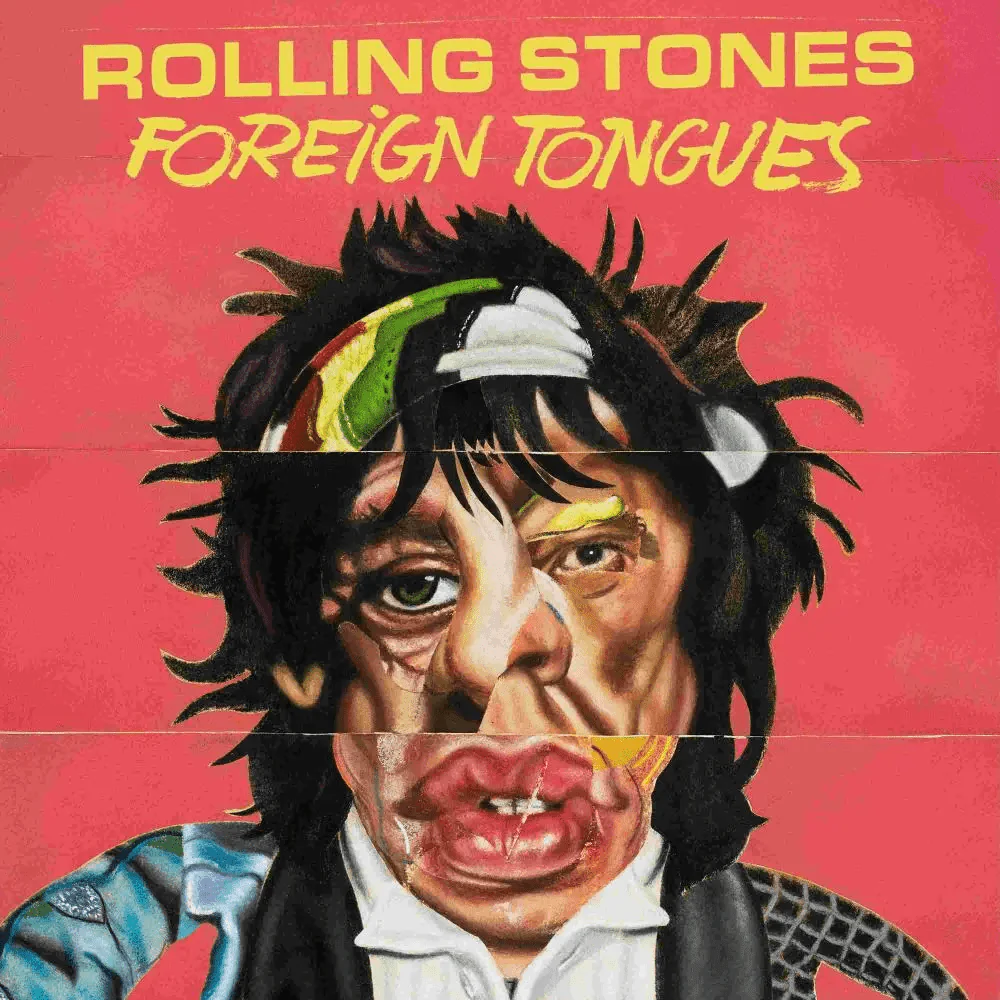
here is an uncomfortable thought hiding behind every new Rolling Stones album, tour announcement, television appearance, and photograph.
Could this be the last one?
It is not a pleasant question.
It also is not an unreasonable one.
Mick Jagger is 82. Keith Richards is 82. Ronnie Wood is 79. Charlie Watts, the steady center of the band’s rhythm section for nearly six decades, died in 2021 at age 80.
The surviving Stones are still making records, giving interviews, trading jokes, arguing about arrangements, and discussing future concerts. Yet they are doing all of it at an age when most people have been retired for years.
That fact is impossible to separate from Foreign Tongues, the Rolling Stones’ 25th studio album.
The record arrived on July 10, 2026, less than three years after Hackney Diamonds. That alone is unusual.
The Stones had taken almost 18 years to move from 2005’s A Bigger Bang to another full album of newly written material.
Now, after finally breaking the drought, they have released two studio records in quick order.
Foreign Tongues has 14 tracks. Twelve are originals.
The other two are versions of Amy Winehouse’s “You Know I’m No Good” and Chuck Berry’s “Beautiful Delilah.”
Andrew Watt returned as producer, and the guest list includes Paul McCartney, Steve Winwood, Robert Smith, Bruno Mars, Chad Smith, and several musicians who have long been part of the Stones’ extended family.
There is also one more performance by Charlie Watts.
His drumming appears on “Hit Me in the Head,” recorded before his death.
That contribution is more than a studio curiosity. It places the band’s past and present in the same song.
Watts is there. Steve Jordan is there elsewhere on the album.
The Rolling Stones continue, but the line between what they were and what they have become is now audible.
Then came Mick Jagger’s comment about the possibility that he may already have played his final Rolling Stones concert.
Asked whether he would recognize the band’s last show as it was happening, Jagger answered, “No. Maybe I have!”
It was not a retirement announcement.
It was not a farewell statement.
Jagger went on to say that he hoped to tour again. He spoke about enjoying travel, meeting people, and performing in places far removed from the usual major-market circuit. He still sounded interested in doing the work.
His point was simpler and more unsettling.
No one gets advance notice about the final time.
A musician can plan a farewell tour. A promoter can print posters that say “One Last Night.”
A band can arrange a final bow, release commemorative merchandise, and film the closing concert.
Life does not always follow the production schedule.
The last Rolling Stones performance may eventually be advertised as such. It also could have already taken place without anyone in the stadium realizing what they were watching.
Jagger’s answer acknowledged that possibility with the kind of dry humor that has allowed the Stones to discuss age without turning every conversation into a funeral.
That tension follows Foreign Tongues from beginning to end.
This is an album made by musicians who still sound interested in being a band. It is also an album created under conditions that no younger group can fully understand.
Every session is valuable. Every finished song matters. Every appearance could become part of the closing chapter, even when nobody intends it that way.
The most interesting thing about Foreign Tongues is not that men in their late 70s and early 80s managed to record it.
The interesting thing is that it does not sound like a ceremonial album.
It is not a respectful museum tour through the Stones’ old styles.
It does not feel like an expensive audio scrapbook assembled so that famous friends could stop by and pay tribute. It does not spend 62 minutes asking listeners to admire the band for surviving.
The record is lively (especially for some old blokes – just kidding), sometimes funny, occasionally uneven, and often less dignified than many people expect elderly rock musicians to be.
That lack of dignity is one of its strengths.
The Rolling Stones have spent more than six decades resisting the behavior expected of them.
In the 1960s, they were supposed to become respectable.
In the 1970s, they were supposed to collapse.
In the 1980s, they were supposed to be replaced by younger bands, electronic music, MTV stars, punk survivors, and glossy pop acts.
In the 1990s, they were supposed to become a nostalgia attraction.
In the 2000s, they were supposed to stop recording and live comfortably from catalog sales.
Does anyone remember the iconic HBO concert? Retirement was not an option then. Probably isn’t now.
In the streaming era, they were expected to become a heritage brand whose old songs provided the soundtrack for movies, television commercials, playlists, and reunion tours.
They did become some of those things. Well, probably every one of those things.
They are a heritage act. A heritage cash cow.Their catalog is enormously valuable.
Their concerts depend heavily on music written decades ago.
Their tongue-and-lips logo is one of the most recognizable commercial symbols in popular culture.
A band can benefit from nostalgia without being completely trapped inside it.
Foreign Tongues is proof that the Stones still want to add something to the pile. To their history.
To say – “The Rolling Stones ain’t done yet.”
Whether fans play new songs beside “Gimme Shelter,” “Tumbling Dice,” “Paint It Black,” “Miss You,” or “Start Me Up” is almost beside the point.
Those records were made under different circumstances, by younger musicians, inside a music industry that no longer exists.
During a different era. Actually, during different eras. Music trends change.
Foreign Tongues has a different job.
It shows what the Rolling Stones sound like now.
Not in 1969.
Not in 1972.
Not in 1978.
Now.
Buy The Rolling Stones ‘Foreign Tongues’ on Amazon
What Mick Jagger Actually Said About the Last Rolling Stones Show
The click-bait headline economy has a way of turning uncertainty into an announcement.
“Mick Jagger Knows He May Have Played His Last Rolling Stones Show” is naturally more dramatic than “Mick Jagger Hopes to Tour Again but Understands That Nothing Is Guaranteed.”
The first version creates an immediate reaction. Often emotional.
The second is closer to the true picture.
But who needs the truth?
In his 2026 interview, Jagger was asked whether he believed the Rolling Stones would undertake another large tour. He said he hoped so.
He described himself as ready to travel and perform. He did not sound like someone looking for an excuse to retire.
When asked whether he would know that a particular concert was the final one, he acknowledged that he might not.
That is not pessimism. That’s not saying – “we’re retired.”
It is an honest statement from an 82-year-old performer who has already lived through the deaths of bandmates, friends, collaborators, rivals, and musicians who once seemed indestructible.
Jagger knows that future plans are plans, not guarantees.
The Rolling Stones’ most recent completed tour ran from April through July 2024.
The final show took place on July 21, 2024, at Thunder Ridge Nature Arena in Ridgedale, Missouri. The official Rolling Stones tour page currently lists no upcoming concerts.
Reports that the group had been considering European and British dates for 2026 were followed by reports that those plans had been shelved.
Cancelled. Done. Nothing to see here.
Since a full tour had not been formally announced, it is more accurate to describe the reported plans as abandoned discussions rather than a canceled public itinerary.
Jagger later said he remained ready to perform and hoped the band could play shows in 2027.
Keith Richards has also discussed the possibility of future concerts, including shorter runs or residency-style engagements that would reduce the physical burden of constant travel.
That is where things stand.
There is interest.
There are possibilities.
There is no announced tour.
There is also no public declaration that the Rolling Stones are finished.
The uncertainty is part of the story.
For most of the band’s history, another tour could be assumed.
Even during periods of disagreement, inactivity, health scares, and solo projects, the Stones eventually returned to the road.
That reality becomes less dependable with age.
The group does not need another tour to prove anything. Its place in music history is secure.
No remaining Stone appears to need the money. They are not trying to build an audience from scratch or rescue a failing career.
A future tour would happen because they still want to do it and because their health allows it.
Both conditions are necessary.
That changes the emotional weight of every show. Every album from this point onward.
When a young band announces a tour, audiences think about ticket prices, set lists, transportation, and whether the group will play their favorite song.
When a legendary band announces a tour, another question joins the list.
Will there be another chance?
That thought can make the experience more valuable. A great memory.
It can also turn a concert into a strange exercise in anticipatory grief.
Fans watch Jagger race down the stage and wonder how long he can keep moving that way.
They notice Richards as he approaches the opening chord of a familiar song.
They look toward the drum riser and remember who is no longer there.
They cheer because the show is happening.
They worry because it cannot happen forever
Foreign Tongues Is Not a Farewell Album
There is no signal that Foreign Tongues was designed as the Rolling Stones’ final album.
It does not arrive with that kind of packaging.
There is no grand chronological concept. The lyrics do not repeatedly survey the band’s career.
There is no extended goodbye to the audience. The group has not marketed the record as a closing statement.
It feels more like the product of renewed momentum.
The creation of Hackney Diamonds forced Jagger, Richards, and Wood back into a rhythm.
Andrew Watt helped establish deadlines and encouraged faster decisions. Instead of allowing unfinished ideas to sit for years, the band moved through songs with more urgency.
Dare we say – purpose?
Some of the songs connected to the sessions that produced Hackney Diamonds. Rather than waiting another decade to decide what should happen next, the Stones continued working.
That may be the most meaningful story (or rumor) surrounding the album.
The Rolling Stones have never lacked unfinished songs, riffs, demos, fragments, and abandoned sessions. Their vault is full of music that was started and left behind.
The difficulty was finishing an album.
Jagger said that the long period without new Rolling Stones music had become a professional frustration.
He wanted the band to stop talking about making a record and actually complete one. Hackney Diamonds solved that problem.
Foreign Tongues suggests this is not a last hurrah. Or temporary.
The band regained its swagger.
That does not mean Foreign Tongues was casually assembled. Speed can expose weaknesses, but it also can protect spontaneity.
A rock band that looks at every sound for too long can remove the very thing that made the music interesting.
The Stones have always needed a little friction.
Their best records rarely sound perfectly organized. The guitars overlap.
Jagger pushes or drags against the rhythm. Keith leaves spaces another guitarist might fill.
Watts used to sit behind the beat in a way that gave the songs room to breathe.
Wyman, Jones, Wood, Mick Taylor, Brian Jones, Nicky Hopkins, Ian Stewart, Billy Preston, Bobby Keys, and many others all contributed to versions of the Stones that were controlled without sounding overly controlled.
Andrew Watt’s challenge is unusual.
He must make a Rolling Stones record that sounds clear and Stones-ishwithout polishing away the dirt.
He also must deal with what’s attached to the band.
If the production is too clean, listeners complain that the Stones have been modernized.
If it is intentionally rough, fans may accuse the producer and band of just imitating the past.
If the songs resemble classic Stones material, the group is said to be repeating itself.
If they move too far away from familiar sounds, people ask why the album does not sound like the Rolling Stones.
There is no way to win that argument completely.
Foreign Tongues works best when the band stops trying to satisfy every version of its audience and simply commits to a performance.
That is why the record’s humor matters.
A solemn Rolling Stones album about aging would probably become exhausting. No Stone has asked to be treated as wise rock n’ roll elders.
They are more believable when they sound irritated, amused, jealous, politically annoyed, romantically frustrated, sexually ridiculous, or ready to start an argument.
Age has changed those emotions.
It has not removed them. But maybe they matter much less.
The Cover Treats Age as Part of the Provocation
Nathaniel Mary Quinn’s cover artwork does not present Jagger, Richards, and Wood as carefully preserved monuments.
Foreign Tongues’ cover morphs their faces into a warped, colorful composition.
Their face appear exaggerated rather than softened. Wrinkles, expressions, teeth, skin, and character are used as raw material.
In other words – no filters.
It is not flattering in the ordinary promotional sense.
That is why it fits.
The Rolling Stones built their early reputation partly by refusing to look safe. Their faces were used as evidence against them.
Newspapers, parents, moral campaigners, and authority figures saw danger in the band’s appearance before hearing a note.
The offense changed over time.
Long hair stopped being shocking.
Rock stars using drugs stopped being surprising.
Sexual suggestion became standard marketing.
The Stones’ influence was absorbed into the culture that once resisted them.
At this point, one of the group’s most disruptive acts is continuing to appear in public without pretending not to have aged.
The members look old because they are old.
The cover does not hide that.
Instead, it uses age as texture.
That choice arrives at a time when entertainment culture often treats aging as a technical flaw.
Faces are filtered, corrected, tightened, reconstructed, de-aged, or digitally returned to an earlier period. Older performers are praised for looking young rather than for remaining creative.
The Stones have participated in those visual experiments too. The “In the Stars” video uses de-aging technology, turning their younger faces into part of the presentation.
Jagger was asked about that decision and about what he finds positive in getting older.
His answer was blunt.
He did not offer a speech about wisdom or inner peace. He said aging is not particularly pleasant. Physical tasks become harder. A person must be more careful.
That answer feels more honest than the standard celebrity discussion of age.
There may be emotional growth. There may be perspective. There may be gratitude.
There also are aching joints, slower recovery, medical appointments, fatigue, loss, and limits that did not exist before.
The Foreign Tongues cover refuses to turn those realities into a tasteful black-and-white portrait.
It is loud.
It is strange.
It is a little ugly.
The Rolling Stones have always understood how to make ugliness useful.
A Companion to Hackney Diamonds, Not a Repeat of It
It is difficult to discuss Foreign Tongues without discussing Hackney Diamonds.
The two records are closely connected.
Both were produced by Andrew Watt.
Both use prominent guest musicians. Both include a Charlie Watts performance.
Both balance rock songs, slower relationship pieces, blues-based material, and closing covers tied to the roots of the band.
Even the sequencing creates parallels.
Each album has a forceful song involving damage to someone’s head. Each includes a Keith Richards lead vocal placed as a quieter change of pace.
Each ends by stripping the music back toward the sounds that helped bring Jagger and Richards together as teenagers.
Some critics have described the albums as mirror images. That comparison is fair, but it does not mean Foreign Tongues is a collection of leftovers with a new cover.
The new record has a looser rhythmic personality.
Hackney Diamonds often sounded like the result of a legendary band determined to prove that it could finish a strong, coherent album.
That helped the record. It also made portions of it feel carefully managed. Kinda.
The Rolling Stones brand is all over it. Intact.
Foreign Tongues sounds less concerned with proving the project can be completed.
The band already knows it can finish.
They move between styles, joke around, and accept rougher edges.
They’re the Rolling Stones – dammit!
Darryl Jones and Steve Jordan are especially important to the tracks.
Jones has worked with the Stones since the early 1990s, yet he has never officially been presented as a full member. His playing has supported decades of tours and recordings.
Jordan, meanwhile, took on the impossible task of playing drums after Charlie Watts.
Neither musician tries to recreate the past note for note.
Jones gives the music muscle and flexibility.
Jordan hits with more force than Watts usually did. His drumming pushes the band ahead and gives the groove a different feel.
That difference is noticeable. Drums and bass are the heart and soul of any band.
A Rolling Stones album without Charlie Watts cannot sound exactly like an album with Charlie Watts.
Pretending it’s not would be a mistake. A misunderstanding. A Rolling Stones faux-paux (if you will).
“Rough and Twisted” Kicks Down the Door Without Knocking
“Rough and Twisted” begins the album with familiar materials.
There is the typical blues groove in the foundation.
There is road imagery.
There is a sense of being pulled toward a place the narrator does not fully trust.
Nothing about that description sounds new for the Rolling Stones.
What matters is the Rolling Stones-esque vibe.
“Rough and Twisted” does not behave like a polite open number.
It has movement and an unsettled energy. The band sounds as though it is already in the middle of the night rather than waiting for the listener to sit down.
That approach is useful because the Stones’ history can become a burden before a new album even starts.
Every opening song is compared with “Gimme Shelter,” “Brown Sugar,” “Rocks Off,” “Miss You,” “Start Me Up,” or whichever classic is the standard.
No new song can compete with decades of memory.
The best response is not to try.
“Rough and Twisted” does not announce that the Stones have reinvented rock music. It gets the record moving. It sets the tone.
Mick’s voice remains one of the album’s most surprising elements.
It has changed, of course. The texture is different. Certain tones are thinner. The studio can assist a singer in ways that are difficult to measure from the finished recording.
Still, the identity is intact.
More importantly, the attitude is intact.
Jagger understands that a convincing Stones vocal is not only about hitting notes. It involves rhythm, phrasing, exaggeration, character, and a small amount of theatrical dishonesty.
He is rarely just “Mick Jagger” inside a song.
He becomes the bitter lover, the suspicious traveler, the wealthy fool, the aging flirt, the wounded observer, or the person pretending not to care.
That distance allows him to sing about romance and desire without asking listeners to believe that every scene is a literal diary entry from an 82-year-old man.
Jagger explained that songwriting depends on imagination. The singer inhabits a character.
Some details may come from life, but the complete person inside the song is not necessarily the person speaking in the interview.
That distinction is easy to overlook.
Listeners often demand autobiography from older singers because age makes every lyric seem like a confession.
A line about regret becomes a deathbed reflection.
A line about love becomes a statement about a current relationship.
A line about exhaustion becomes evidence that the performer is ready to quit.
Sometimes a song is simply a song.
“In the Stars” Balances Familiar Riffs and Modern Construction
“In the Stars” was one of the songs released before the full album.
Its guitar movement immediately enters recognizable Stones territory. The song has the kind of strut that could be placed near several earlier periods in the band’s career.
That familiarity can be comforting.
It also raises one of the larger questions surrounding Andrew Watt’s production.
How much structure can be added before the Rolling Stones begin to feel too tidy?
Modern pop and rock production often places sections with great precision. The verse arrives quickly. The pre-chorus increases tension. The chorus delivers a clear phrase that can be clipped, shared, repeated, and remembered.
The Stones came from a different recording tradition.
Many of their best performances feel discovered rather than assembled. A groove develops. Instruments enter and disappear.
The singer starts being the singer.
The arrangement may contain identifiable sections, but the emotional force comes from the sense that the musicians are inside the same room responding to each other.
On Foreign Tongues, those two methods occasionally collide.
Watt understands hooks.
He also understands the band’s history.
That can produce a song in which a loose guitar section leads into a chorus that feels noticeably more organized. Some listeners will hear clarity. Others will hear the machinery.
“In the Stars” is caught inside that debate.
Its best moments have the physical quality expected from the Stones. The guitars do not simply decorate the beat. They make the beat feel unstable.
At the same time, the song is built for quick recognition.
There is nothing dishonest about that.
The Rolling Stones have always wanted hits.
They were never an underground band accidentally burdened with mass popularity.
Jagger and Richards watched what other artists were doing. They understood radio formats, singles, television, fashion, touring, publicity, and the importance of a memorable chorus.
The idea that the Stones once created without commercial awareness is romantic but inaccurate.
They were ambitious. Yet still true to who they were.
They still are.
We’ll forget about “Undercover of the Night.”
“Jealous Lover” Lets Jagger Become Ridiculous Again
“Jealous Lover” makes room for Jagger’s falsetto.
Any Rolling Stones fan will recognize the historical reference. His high voice immediately brings “Emotional Rescue” into the conversation.
That comparison is unavoidable.
It also can be misleading.
“Emotional Rescue” arrived in 1980, when disco, punk, new wave, and dance-oriented pop had already changed the environment surrounding rock.
The Stones responded by making music that annoyed part of their established audience and proved they were listening beyond their own catalog.
“Jealous Lover” does not carry the same danger.
Falsetto no longer surprises anyone.
An elderly rock singer using it might, though.
Jagger leans into the performance without trying to make it tasteful. The song is theatrical, needy, amused, and slightly absurd.
That is appropriate.
Jealousy is rarely dignified. In hindsight, it can be quite embarrassing.
A singer who approaches it with complete seriousness can quickly become unbearable. Jagger gives the emotion enough exaggeration to reveal the comedy inside it.
The performance also points toward a reason the Rolling Stones remain more convincing than many veteran acts.
They still understand embarrassment as an artistic tool.
Older musicians are often encouraged to protect their legacy. Every photograph should look important. Every album should be described as mature.
Every interview should confirm that the artist has reached a place of understanding.
The Stones are better when they risk looking foolish.
They have always mixed danger with comedy.
Keith’s outlaw image contains humor.
Ronnie Wood’s facial expressions contain humor.
Jagger’s stage movements contain humor.
Even the band’s most threatening periods were accompanied by exaggeration, costumes, characters, and an awareness that rock stardom is partly theater.
“Jealous Lover” keeps that alive.
“Mr. Charm” Finds Comedy in Wealth, Age, and Staying Home
“Mr. Charm” may be the song that most clearly acknowledges Jagger’s age without turning it into a serious announcement.
The narrator once wanted to travel beyond the ordinary world. Now he would rather stay home, have a drink, and enjoy the evening without unnecessary trouble.
That change could be read as surrender.
The song treats it as comedy.
The main character is no enlightened bloke. He’s smug, comfortable, and his politeness always hides a subtle edge.
The song also contains the line that created headlines involving Elon Musk.
Jagger later explained that the reference was not intended as a simple insult. The lyric considers who could be trusted to provide space transportation, and the description of Musk as a “mad mogul” operates as a sideways compliment as much as a criticism.
The explanation shows a familiar problem. So to speak.
Names travel farther than context. Drop a name – get a headline.
A famous person mentions another famous person. The mention becomes newsworthy. Clickbait. The rest of the verse disappears.
That idea is not new, but social media accelerates it.
The same environment affects how listeners find an album.
A 62-minute record competes with short videos, reaction clips, headlines, isolated lyrics, algorithmic recommendations, and selected tracks placed into playlists.
The Stones came from a world in which albums could dominate attention for weeks. Years ago – listeners bought the record, studied the cover, read the credits, and played the sides repeatedly because the purchase represented a commitment.
Foreign Tongues enters a world where a single line can travel farther than the song.
“Mr. Charm” understands this without becoming a lecture.
It’s a character piece.
The voice is older.
He is still capable of causing trouble from the comfort of his home. At the click of a keyboard.
“Divine Intervention” Shows Why Ronnie Wood Still Matters
Ronnie Wood joined the Rolling Stones in the 1970s, which somehow still allows him to be described as the newer guitarist.
That description has become ridiculous.
Wood has now spent more than 50 years inside the band’s musical conversation. He understands when to push Richards, when to follow him, when to play around the vocal, and when to create the impression that neither guitarist is fully in charge.
“Divine Intervention” gives that relationship room to move.
The song carries garage-rock vibes while Jagger travels through scenes involving New York and Los Angeles. Robert Smith contributes guitar, adding another recognizable musician without making the track feel like a celebrity demonstration.
That makes a huge difference.
Guest appearances on veteran-rock albums can become a substitute for ideas.
Enuff Z’Nuff recently used a lot of guest musicians on Xtra Cherries (GadgetFoodandTravel.com’s album of 2025)
A famous name is announced. The marketing department promotes it. Fans search for the exact second when the guest starts playing.
The song itself becomes secondary.
Foreign Tongues includes an impressive group of outside musicians, but the record generally avoids turning them into the main attraction.
The Rolling Stones are the main attraction. They get by with a little help from their friends.
Paul McCartney plays bass on “Covered in You.”
Steve Winwood plays piano and organ.
Robert Smith appears on “Divine Intervention” and adds supporting parts elsewhere.
Bruno Mars is credited with cowbell on “Never Wanna Lose You.” Maybe that song needed more cowbell?
These details are enjoyable, but none of the guests becomes the reason the album exists.
The Rolling Stones remain at the center.
That may sound obvious.
It is not always true on late-career albums.
“Ringing Hollow” Complicates the Stones’ Relationship With America
The Rolling Stones would not exist in their recognizable form without American music.
Blues, rhythm and blues, rock and roll, country, soul, gospel, funk, and early pop shaped their language.
Jagger and Richards connected as teenagers partly through their shared interest in American records.
Chuck Berry and Muddy Waters were not distant historical figures in that moment. Their music was immediate, exciting, and connected to a world that seemed larger than postwar Britain.
The Stones then helped bring versions of that music back.
That history has always produced complicated questions about influence, access, race, credit, commerce, and who benefited most from the international popularization of Black American music.
The Stones have repeatedly acknowledged their influences. Their early recordings introduced some listeners to musicians they had never heard. They also became vastly wealthier and more famous than many of the artists who built the musical foundations they used.
Both statements can be true.
“Ringing Hollow” approaches America from another direction.
It treats the country as a damaged relationship. Sad but true. More true than sad.
The song begins from affection. America was imagined before it was experienced. Movies, cigarettes, records, cities, highways, clubs, and myths created an emotional attachment from a distance.
Then it sees the country more closely.
The romance becomes harder to maintain.
Jagger described the song as a love song to America and a lament over its present condition. His relationship with the country is not limited to New York or Los Angeles. Decades of touring exposed him to cities, smaller markets, regional differences, and places many Americans rarely visit.
It gives the criticism a different tone.
The song is not written by a visitor who arrived last week and reached a quick conclusion.
It comes from someone who has watched the United States change over more than 60 years.
The Stones’ America was never completely real.
It was built from records, films, literature, fashion, headlines, and the excitement of distance.
Still, the band spent enough time in the country for that imagined place to collide with the actual one.
“Ringing Hollow” lives inside the disappointment.
The song refers to manipulation, authoritarian temptation, public anger, and people willing to stir a crowd.
It does not become a list of current political names.
That decision gives the song a wider reach.
Political figures change.
The appetite for power does not.
The lyric connects current anxiety with an older Stones tradition. At their best, Jagger and Richards have used personal language to approach social conditions. Desire, violence, money, status, race, class, celebrity, and national identity often overlap inside the same song.
“Ringing Hollow” is not “Gimme Shelter.”
It does not need to be.
It is an older man looking at a country he once romanticized and wondering what remains of the promise.
“Never Wanna Lose You” Moves Instead of Looking Back
“Never Wanna Lose You” gives Jones and Jordan room to reshape the rhythm.
The song carries a dance-rock quality that recalls the Stones’ willingness to absorb whatever was moving around them in the late 1970s and 1980s.
“Start Me Up” was originally a reggae song.
That willingness was essential to their survival.
The band’s sound is often reduced to a narrow image: open-tuned guitar, blues foundation, loose rhythm, Jagger sneer.
That matters.
They do not explain the complete catalog.
The Stones have recorded baroque pop, psychedelic music, country, gospel, funk, disco, reggae, punk-influenced rock, electronic experiments, ballads, acoustic blues, and songs shaped by whatever was happening in clubs and on the radio.
They were not equally convincing in every style.
They did not need to be.
The willingness to try kept the music from becoming a single repeated gesture.
“Never Wanna Lose You” belongs to that part of the band’s personality.
It is not an attempt to place the Rolling Stones inside the center of 2026 pop.
That would probably sound desperate.
Instead, the song allows rhythm to lead.
Bruno Mars’ cowbell credit is amusing, but the track’s real value comes from the way the band moves.
The ability to move remains central to Jagger’s public identity.
His stage performance has always depended on physical communication. Even listeners who do not know the words understand the character from the body.
That creates a difficult problem as he ages.
A songwriter can continue writing while seated.
A guitarist can adjust a performance around physical limits.
A singer whose image depends partly on running, dancing, pointing, turning, and covering a stadium-sized stage must negotiate age in public.
Jagger has adjusted without turning the adjustment into the show.
He trains.
He prepares.
He manages his energy.
The audience sees the result, not the complete work required to produce it.
The question is not whether he can move exactly as he did in 1972.
He cannot.
No one can.
The question is whether he can still use movement to communicate with a crowd.
So far, the answer has been yes.
“Hit Me in the Head” Brings Charlie Watts Back Into the Room
The first sound of Charlie Watts on “Hit Me in the Head” carries an emotional charge that has little to do with nostalgia marketing.
Watts is not being imitated.
He is playing.
This matters.
His death changed the Rolling Stones in ways that go beyond the drum chair.
Watts was a musician, a friend, a visual presence, a source of dry humor, and one of the people responsible for keeping the Jagger-Richards relationship inside a functioning band.
He also represented continuity.
The Stones changed producers, labels, managers, guitarists, bassists, keyboard players, backing singers, horn sections, stage designs, and business arrangements. Watts remained.
His style was so closely connected to Richards that removing it changed the sensation of the entire group.
Watts did not play like a drummer trying to win an argument.
He created authority through restraint.
There was space inside his work. The spaces allowed Richards’ guitar to shift. They allowed Jagger to phrase around the beat. They allowed the bass to carry more movement.
Steve Jordan does not reproduce that feeling exactly.
He should not be asked to.
Jordan had a relationship with Richards long before taking over the touring position. He understands the music, but his approach is different. He can make the Stones sound more direct and aggressive.
“Hit Me in the Head” briefly restores the old center.
Listeners know they are hearing a performance from before Watts died. That knowledge changes the experience.
Every drum hit feels like evidence.
The song proves that recorded music can defeat time in one limited way.
Watts is gone.
His performance continues.
The effect is not supernatural. It is mechanical. Microphones captured vibrations. Engineers preserved them. The recording was placed inside a new album.
Emotion makes the process feel larger.
This is what records do for all musicians.
The difference is that audiences do not always notice until someone dies.
A voice that once felt present becomes an artifact.
A guitar solo becomes a message from a closed period.
A count-in becomes painfully human.
The Rolling Stones have lost Brian Jones, Ian Stewart, Charlie Watts, Bobby Keys, Nicky Hopkins, Billy Preston, and many other people connected to their music.
Each death changes the way earlier recordings are heard.
“Hit Me in the Head” places that reality inside a current release.
It is a new Rolling Stones song with the old drummer.
There may never be another one.
“You Know I’m No Good” Reverses the Usual Direction of Influence
The Rolling Stones have covered many songs, particularly blues and early rock material.
Their version of Amy Winehouse’s “You Know I’m No Good” is different.
Winehouse belonged to a later generation.
Her music drew from soul, jazz, rhythm and blues, pop, and other traditions that also influenced the Stones. By covering her, the band reverses the usual historical direction.
The elders interpret a song by a younger artist.
Winehouse died in 2011 at age 27. Like Janis, Jimi, Kurt and Jim.
That fact in itself creates another unavoidable contrast.
Jagger sings her words as an 82-year-old man who has survived more than six decades of public life. Winehouse wrote and recorded from a much younger, more vulnerable position.
Jagger does not try to imitate her voice.
He changes the perspective.
The gender shifts. The age shifts. The history carried by the singer shifts.
His harmonica takes over. The performance connects Winehouse’s song to the Stones’ blues language without reducing it to a traditional blues cover.
There is a risk in choosing a song so closely tied to a distinctive performer. It’s like covering “Stairway to Heaven.’
A faithful copy would be pointless.
A radical reconstruction could lose the emotional directness of the writing.
The Stones settle between those extremes.
The song remains recognizable.
The band enters it from a different door.
That choice also says something about musical inheritance.
The Rolling Stones were influenced by earlier musicians.
Later artists were influenced by the Stones.
Those later musicians then created work that can influence the Stones in return.
History does not move in only one direction.
A band that has lasted 64 years can become part of a conversation with artists who were born after its career began.
That is another way the Stones have avoided complete isolation inside their own legacy.
They still listen outward.
Keith Richards and “Some of Us”
Every later-period Rolling Stones album carries a familiar moment.
The energy changes.
Jagger steps away from the center.
Keith Richards sings.
These performances are often treated as emotional rest stops. Richards’ voice is cracked, limited, warm, and immediately recognizable. It sounds lived in.
“Some of Us” fits that tradition.
The danger is that a Keith ballad can become predictable. Listeners know what they are expected to feel. The rough voice suggests honesty. The slower arrangement suggests reflection. The image of the indestructible outlaw admitting weakness completes the effect.
Richards understands that expectation.
He does not need to fight it.
At his age, the cracks in the voice are not decoration. They are the instrument.
A younger singer can imitate damage.
Richards has experienced it. All the highs and lows.
That does not make every performance profound, but it gives the words a physical context.
When he sings about being brought to his knees, the phrase carries romantic meaning and another meaning that arrives with age.
The body is no longer abstract.
That double meaning follows almost every elderly performer.
A song written decades earlier can change because the singer’s body has changed.
“Before They Make Me Run” sounded defiant when Richards was younger. It sounds different now.
“You Got the Silver” once belonged to a man approaching 30. Today it is sung by a man in his 80s.
The lyrics remain.
The person delivering them does not.
That is why old songs can continue evolving even when the arrangement stays familiar.
“Covered in You” Places Paul McCartney Inside Another Stones Record
Paul McCartney plays bass on “Covered in You,” following his appearance on Hackney Diamonds.
The idea of a Beatle appearing on multiple Rolling Stones albums once would have been treated as a major event.
The Rolling Stones vs. The Beatles was a real press created event.
Now it feels almost natural.
That change reveals how much the old rivalry depended on marketing, press narratives, fan identity, and the need to make popular music feel like a competition.
The Beatles and Rolling Stones were different bands.
They also lived inside the same rapidly expanding British music environment. They knew each other, influenced one another, watched each other’s releases, and were turned into opposing teams by audiences who enjoyed the contrast.
Decades later, the argument has lost most of its urgency.
McCartney does not need to defeat the Stones.
The Stones do not need to prove they outlasted the Beatles.
They all survived long enough to see the supposed rivalry become history.
McCartney’s presence also adds another layer to the album’s discussion of mortality.
He is one of the few living performers who can understand Jagger’s position from the inside.
Both men became internationally famous while young.
Both have been watched, analyzed, imitated, criticized, and celebrated for more than 60 years.
Both carry catalogs that have become part of public memory.
Both continue making new music while knowing that any new project will be compared with work created when they were in their 20s.
That burden is difficult to imagine.
Most people are not asked to compete with their younger selves every time they go to work.
A teacher is not reviewed against a class taught in 1969.
An accountant is not judged by a report prepared in 1972.
A doctor is not told that every new effort fails to match an operation performed at age 29.
Legendary musicians receive that comparison constantly.
The public does not only remember their youth.
It owns a recorded version of it.
“Back in Your Life” and the Value of an Ordinary Problem
“Back in Your Life” deals with a familiar romantic situation.
Someone enters another person’s world.
The relationship becomes uncertain.
Communication stops.
The person left behind wants another chance.
That theme is not revolutionary.
Its ordinariness is useful.
A late-career album does not need to make every song about death, history, global politics, or the burden of fame.
Older people still deal with ordinary emotions.
They feel ignored.
They misread signals.
They become jealous.
They miss people.
They make bad decisions.
They want attention from someone who is not calling back.
Jagger acknowledged that the emotional situation behind the song was familiar, though he joked that he was not saying it had happened the previous day.
The humor protects the privacy of the person and the usefulness of the song.
Listeners do not need the exact biography.
They need enough truth to believe the character.
That may be one of the reasons Jagger remains difficult to define in interviews.
He has spent most of his life dividing himself into roles.
There is the stage Jagger.
There is the interview Jagger.
There is the songwriter.
There is the businessman.
There is the bandmate.
There is the public figure who understands that almost any personal detail can become a headline.
In his 2026 interview, he discussed the psychological effect of extreme fame. He described the danger of becoming separated from ordinary life and the need to make a deliberate effort to remain connected to it. He also acknowledged that the state of mind created by fame may never be completely repaired.
That admission is more revealing than another story about a hotel room in the 1970s.
The Rolling Stones’ mythology has often made excess look like freedom.
Jagger’s comments suggest another side.
Fame creates characters.
The performer must learn when to use them and when to switch them off.
“Beautiful Delilah” Returns to the Beginning
The album ends with Chuck Berry’s “Beautiful Delilah.”
That choice is not subtle.
Chuck Berry sits near the foundation of the Rolling Stones’ musical identity.
Jagger and Richards connected as teenagers when Richards noticed the records Jagger was carrying. The story has been repeated so many times that it risks becoming an origin myth separated from two actual young men on a train platform.
Still, the records mattered.
They created a language.
Ending Foreign Tongues with Berry turns the final track into a circle.
The Stones travel through contemporary production, political anxiety, aging, guest appearances, relationship songs, humor, and the altered rhythm section. Then the album returns to an early source.
The performance is rough.
That roughness is part of the point.
A polished tribute would place Berry behind glass.
The Stones approach the song as something to play, not something to preserve quietly.
That does not erase the decades between their beginning and the present.
It makes those decades more visible.
Jagger and Richards are no longer teenagers studying American records.
They are elderly musicians whose own records became objects of study.
They are part of the history they once admired from a distance.
The closing song can be heard as a tribute.
It can be heard as a reminder.
It also can be heard as two musicians returning to the reason they began before anyone knew there would be a career to protect.
The Mortality of Legendary Rock Stars Has Become Part of the Story
Rock music spent much of its early life presenting itself as young.
Youth was not simply the age of the musicians. It was part of the sales pitch.
The music challenged parents, institutions, established taste, and older forms of entertainment. A young audience recognized itself in young performers.
No one had a reliable plan for what would happen when those performers became elderly.
Frank Sinatra could age because the image of the mature nightclub singer already existed.
Blues and jazz musicians could continue performing later in life because those traditions allowed authority to deepen with age.
Rock stars faced a different problem.
The clothing, movement, volume, rebellion, sexuality, and danger were tied to youth.
What happens when the rebel becomes a grandfather?
What happens when the singer who warned against trusting anyone over 30 passes 80?
The first answer was often denial.
Older rock musicians dyed their hair, repeated stage poses from earlier decades, and avoided direct discussion of age. Promotional photographs softened the changes. Interviews focused on energy and youthfulness.
Some wear wigs.
That could work for a while.
Eventually, the distance between the image and the body became too large to ignore.
The Rolling Stones took another path.
They continued using the old iconography while allowing age to become visible inside it.
Jagger still performs as Jagger.
Richards still performs as Richards.
Wood still performs as Wood.
They have not replaced leather, guitars, bright shirts, scarves, skull jewelry, and stadium-sized stage design with tasteful sweaters and acoustic evenings.
At the same time, no one looking at them believes it is 1975.
That combination creates a strange but honest performance.
The roles continue.
The bodies carrying the roles have changed.
Audiences participate in the arrangement.
Fans do not expect Jagger to be 30. They expect him to access enough of the energy associated with that person to make the current show convincing.
That is different from demanding an exact reconstruction.
A concert by an elderly legendary musician can feel like a negotiation among memory, present ability, and collective affection.
The audience helps complete what age can no longer reproduce.
A singer may let the crowd carry a chorus.
A guitarist may simplify a passage.
The set may include longer breaks, carefully placed ballads, guest spots, or arrangements that reduce physical strain.
None of those adjustments automatically makes the performance dishonest.
Live music has always depended on adaptation.
The problem begins when the mythology requires audiences to pretend they cannot see or hear decline.
That is where admiration can become uncomfortable.
Fans want one more show.
Promoters want one more tour.
Managers, crew members, venues, merchandise companies, sponsors, and local businesses all benefit from the machinery continuing.
The performer may want it too.
Those interests can make it difficult to know when continuing remains an act of commitment and when it becomes an act of denial.
There is no universal answer.
Some musicians lose technical ability but gain interpretive depth.
Some remain physically capable but emotionally disengaged.
Some stop too soon.
Some remain onstage past the point where the performance supports the legacy.
The public often reaches conclusions without knowing the medical facts, private wishes, or working conditions.
That is why Jagger’s comment matters.
He did not promise another tour.
He did not declare the end.
He acknowledged uncertainty.
At 82, uncertainty is the only honest position.
Rock’s Early Deaths Created the Myth of Permanent Youth
The history of rock is filled with performers who died young.
Buddy Holly was 22.
Eddie Cochran was 21.
Brian Jones, Jimi Hendrix, Janis Joplin, Jim Morrison, Kurt Cobain, and Amy Winehouse died at 27.
Otis Redding was 26.
Marc Bolan was 29.
Duane Allman was 24.
Randy Rhoads was 25.
Cliff Burton was 24.
Stevie Ray Vaughan was 35.
The circumstances differed. Accidents, addiction, illness, violence, suicide, and combinations of bad decisions and terrible timing ended lives that audiences assumed would continue.
Early death freezes the performer.
The face does not wrinkle.
The voice does not weaken.
There is no disappointing late album.
There is no awkward attempt to follow a trend.
There is no farewell tour with premium ticket packages.
The artist remains young because the record remains young.
That creates a cruel comparison for musicians who survive.
Jagger, Richards, Wood, McCartney, Bob Dylan, Paul Simon, Pete Townshend, Roger Daltrey, Ringo Starr, and other surviving figures are asked to compete not only with their own youth but also with dead contemporaries who never had to reveal what old age would look like.
Survival is less romantic.
It includes ordinary decline.
The musician may need surgery.
The voice changes.
The hands become less flexible.
Hearing changes.
Travel becomes harder.
Friends die.
The public sees photographs from hospital entrances and compares them with album covers taken 50 years earlier.
Yet survival makes a different kind of art possible.
An artist can revisit a song after the life imagined inside it has actually happened.
A young singer can perform regret.
An elderly singer can remember it.
A young songwriter can speculate about loss.
An elderly songwriter has a longer list of names.
That difference does not automatically make later work better.
It makes it possible in another way.
Charlie Watts Changed the Meaning of the Stones’ Survival
Before Charlie Watts died, the Rolling Stones’ longevity could still be discussed as a nearly uninterrupted line.
Brian Jones was gone.
Bill Wyman had left.
Ian Stewart died in 1985.
Many collaborators had passed away.
But the Jagger-Richards-Watts core remained.
Watts’ death broke that image.
The band continued, but the meaning of “the Rolling Stones” changed.
This was not the first lineup change.
It was different because Watts had become part of the emotional definition of the group.
His visual calm balanced Jagger’s movement, Richards’ danger, and Wood’s cheerfully restless presence.
He often looked like the only person onstage who had not agreed to participate in the mythology.
That became its own mythology.
Fans repeated stories about his dislike of rock-star behavior, his preference for jazz, his suits, his drawing, his hotel-room sketches, and the famous incident in which he reportedly reminded Jagger that Jagger was his singer rather than the other way around.
The stories turned Watts into the band’s quiet adult.
The recordings reveal something more important.
He made the songs feel the way they felt.
After his death, the Stones faced a decision.
They could stop.
They could continue briefly and frame every appearance as a tribute.
They could hire a drummer who attempted to imitate Watts.
Or they could accept that the sound would change.
They chose the final option.
Steve Jordan does not erase the loss.
His presence makes the loss easier to hear.
That may be healthier than pretending nothing happened.
Hackney Diamonds and Foreign Tongues both include Watts because recordings remained available.
Future records may not have that bridge.
At some point, the Stones will have to enter a studio with no possibility of discovering another usable Charlie Watts track.
That will be another ending, even if the band continues.
Mortality rarely arrives only once.
It removes people.
Then it removes the possibility of new work from those people.
Then it removes the people who remember how the room felt when that work was made.
The process continues.
The Last Show Is Usually Recognized in Retrospect
Music history likes a clean ending.
The Beatles played on the Apple rooftop.
The Band held The Last Waltz.
Black Sabbath staged Back to the Beginning as a final concert event.
Other artists have announced farewell tours, final residencies, last albums, or retirement performances.
Some stayed retired.
Some returned.
A farewell can be sincere at the time and later become inaccurate.
Health improves.
Relationships change.
Financial circumstances shift.
A new offer appears.
The performer misses the stage.
The audience still wants the songs.
The final show becomes another show.
The Rolling Stones have avoided a formal farewell partly because they have not behaved as though they want one.
A farewell tour would create enormous business.
The ticket demand would be extreme.
Every city would frame the concert as a historic event.
Documentaries, live albums, merchandise, streaming specials, and sponsorships could surround the final dates.
The Stones understand that business better than almost anyone.
Their refusal to use the farewell label may reflect a reluctance to make a promise they cannot guarantee.
It also protects the possibility of continuing.
Once a band announces the end, every later appearance requires an explanation.
Without the announcement, the Stones can work when they are ready.
The cost is uncertainty for the audience.
Fans do not know whether to treat the next concert as the last one.
Jagger’s answer suggests they should not try.
A final concert may only become final because nothing follows it.
The Missouri performance in July 2024 currently occupies that position.
It was not staged as the closing Rolling Stones concert.
The band played the show, completed the tour, and left.
If they perform again, Missouri becomes another tour finale.
If they do not, it becomes the last concert.
The music played that night does not change.
The history attached to it does.
Why Fans Struggle With the End of Legendary Bands
A fan’s relationship with a band is not the same as a personal friendship.
The fan may feel emotionally close to the music while knowing nothing meaningful about the people who created it.
That distance does not make the emotion false.
Songs become attached to memories.
A person hears the Stones in a parent’s car, at a party, during a breakup, on a road trip, at a funeral, or through the wall of an older sibling’s bedroom.
The music enters the listener’s biography.
When the band ends, the songs remain.
Still, something closes.
There will be no possibility of another tour.
No chance of a new single.
No interview in which Richards insults someone and laughs.
No photograph of Jagger, Richards, and Wood standing together at an album event.
The future portion of the relationship disappears.
That is why elderly performers can create such intense audience loyalty.
Fans are not only paying for the present concert.
They are protecting access to a part of their own lives.
The Rolling Stones complicate this feeling because they have been present for so long.
A person born when the band formed in 1962 is now in their 60s.
Someone who saw the Stones in 1981 has been carrying that memory for 45 years.
A teenager who discovered them during the Voodoo Lounge era is now middle-aged.
Even a listener who arrived through A Bigger Bang has been following the band for more than two decades.
The audience has aged beside the group.
The Stones’ mortality reminds listeners of their own.
That may be the real discomfort hiding behind questions about Jagger’s final show.
People are not only asking how long he has.
They are asking how long they have.
The Rolling Stones Survived Because They Never Belonged to One Music Industry
The phrase “the music industry” makes the business sound stable.
It has not been stable during the Rolling Stones’ career.
The band did not survive one industry for 64 years.
It survived several different industries that happened to share the business of recorded music and live performance.
Each period had different formats, gatekeepers, promotional systems, revenue sources, technical limitations, and audience habits.
The Stones’ ability to move through those changes is one of the most remarkable parts of their story.
The Singles, Radio, and Television Era
The early Rolling Stones entered a business built around singles, radio exposure, music papers, clubs, theaters, and television appearances.
Albums existed, but the rock album had not yet become the dominant cultural object it would become later in the decade.
The band’s early identity depended on interpretation.
They performed American blues and rhythm-and-blues songs for British listeners, developing a harder image than many of their pop contemporaries.
Television helped spread that image.
So did controversy.
The Stones understood quickly that disapproval could function as publicity.
A threatening photograph could sell the band before a listener understood the music.
That strategy required more than luck.
Jagger had an unusual awareness of presentation.
Andrew Loog Oldham recognized the value of positioning the Stones as the unacceptable alternative to cleaner pop groups.
The press helped create the conflict.
The band then supplied enough behavior to keep it alive.
Most acts from that period disappeared.
The Stones survived because they moved from interpretation into songwriting.
Jagger and Richards developed material that could carry the group beyond the first wave of blues covers.
Songs such as “The Last Time,” “Satisfaction,” “Get Off of My Cloud,” “Paint It Black,” “Ruby Tuesday,” “Jumpin’ Jack Flash,” and “Street Fighting Man” expanded what audiences expected from them.
Without that transition, the Rolling Stones might be remembered as an important early British rhythm-and-blues band.
Songwriting made them something larger.
The Album Era
By the late 1960s, the album had become more important.
Listeners expected full statements.
Cover art mattered.
Sequencing mattered.
Studio experimentation mattered.
The Stones responded with the run that continues to define their critical reputation: Beggars Banquet, Let It Bleed, Sticky Fingers, and Exile on Main St.
Those albums did not sound identical.
They shared an atmosphere.
Blues, country, gospel, rock and roll, acoustic music, electric distortion, violence, sex, exhaustion, wealth, displacement, and American mythology moved through them.
The band appeared to be inventing a permanent language.
That success later became a trap.
Every new Rolling Stones album would be measured against those records.
The music industry changed.
The critical standard did not.
The band’s survival required learning to carry a classic period without spending every year trying to recreate it exactly.
The Stadium Era
As rock audiences grew, concerts moved from theaters and halls into arenas and stadiums.
That transition changed performance.
A small stage allows subtle communication.
A stadium requires scale.
Movements become larger.
Screens, lighting, sound reinforcement, ramps, platforms, inflatable props, video, and dramatic entrances help connect performers with people seated far away.
Jagger became one of the essential architects of stadium rock.
He learned how to use space.
He also understood that a concert was not merely a group of songs performed in order. It was a controlled audience experience.
In his 2026 interview, Jagger described his live responsibility in practical terms. People arrive carrying problems, bills, family concerns, work stress, and private worries. His job is to help them forget those things for the duration of the performance and increase the excitement already inside the crowd.
He also credited Little Richard with showing him how a performer could create temporary community.
That lesson helped the Stones survive the growth of their own audience.
A club band that does not learn stadium communication becomes physically smaller as its success increases.
Jagger made the band feel larger.
Punk, Disco, and the Threat of Replacement
By the late 1970s, the Rolling Stones faced a problem.
They had become the establishment that younger rock music was supposed to attack.
Punk rejected bloated production, wealthy rock stars, technical excess, and the distance between performers and audiences.
Disco changed rhythm, nightlife, radio, and club culture.
The Stones could have defended their territory by making a respectable blues-rock album and criticizing younger music.
Instead, they listened.
Some Girls absorbed punk’s compression and disco’s pulse without becoming either a punk album or a disco album. Both are true.
“Miss You” moved through club culture.
“Respectable” accelerated the guitars.
“Shattered” turned New York decay into clipped, nervous rock.
“Beast of Burden” slowed down without losing movement.
The album did not erase the band’s age or history.
It made those things less important for 40 minutes.
This is one reason Some Girls remains the automatic comparison whenever the Stones make a lively later record.
The comparison is usually exaggerated.
Still, it points toward a real achievement.
The Stones survived a generational challenge by adapting rather than lecturing.
The Rock & Roll Hall of Fame has described the group’s longevity in similar terms, noting that the Stones absorbed changing styles while maintaining their roots in blues and Chuck Berry-influenced rock and roll. The band was inducted in 1989.
MTV and the Video Age
MTV created another shift.
Image had always mattered in popular music, but music video demanded a different kind of visual storytelling.
Younger performers entered the market with video built into their identity.
The Stones were no longer the most naturally current faces on television.
They participated anyway.
Some videos were clever.
Some were awkward.
Some now look deeply tied to the decade that produced them.
That is part of adaptation.
Not every response to a new medium will age well.
The greater risk is refusing to respond at all.
Jagger understood television performance. He understood costume, movement, exaggeration, close-ups, and the ability of a short visual piece to carry a song farther.
The Stones did not dominate MTV in the same way younger stars did.
They remained visible inside it.
At the same time, their live business grew.
The modern Stones touring machine became a major part of the band’s identity. Large stages, sponsorships, global routing, premium ticket demand, and carefully managed catalogs turned concerts into enormous events.
The group did not merely survive the rise of stadium touring.
It helped define the economic possibilities.
The CD Boom and Catalog Repackaging
The compact disc created another revenue cycle.
Fans who already owned Stones albums on vinyl bought them again on CD.
Catalogs were remastered.
Box sets expanded.
Rare tracks were collected.
Old music became a new product.
The Rolling Stones were ideally positioned for this market because the catalog was large, familiar, and historically important.
This period taught the music business that the past could be resold repeatedly through format improvement, remastering, expanded packaging, alternate mixes, live recordings, and archival releases.
The Stones benefited from that system.
They also continued touring and occasionally recording, which kept the catalog connected to a living band.
That distinction increased its value.
A reissue from an inactive group is history.
A reissue from a touring group can become part of a current event.
File Sharing, Downloads, and the Collapse of the Old Recording Model
The arrival of digital file sharing damaged the economic structure that had supported major-label recording.
Albums could be copied instantly.
Individual songs became easier to separate from the larger record.
Physical sales declined.
Digital stores created legal downloads, but the old level of revenue did not return.
The Stones were protected by their catalog and touring power.
They did not depend on a current album selling millions of copies to finance the next stage of their career.
That security allowed them to reduce studio output without disappearing.
It also contributed to the long gap between A Bigger Bang and Hackney Diamonds.
A new album no longer served the same financial purpose it once had.
Touring could continue with familiar songs.
Reissues could keep the catalog active.
Live releases and archival projects could serve committed fans.
The economic urgency to create 12 new songs was weaker.
This is an important part of the story.
The Stones’ long recording silence was not simply artistic laziness.
The music business had changed the value of a new Rolling Stones album.
A record could generate attention, critical discussion, streaming activity, physical sales, and new songs for the stage.
It was unlikely to become the center of the band’s income in the way an album might have decades earlier.
That made Jagger’s frustration significant.
He wanted new music even when the business did not require it.
Streaming and the Playlist Era
Streaming changed the relationship between old and new music.
A listener no longer needs to purchase a full Rolling Stones album to hear one song.
The entire catalog can sit beside current releases, independent artists, podcasts, playlists, and millions of other recordings.
That creates intense competition for attention.
It also gives old songs permanent availability.
A teenager can encounter “Gimme Shelter” after hearing it in a film, game, series, short video, recommendation, or family playlist. The song does not need to be physically in stock at a local store.
Catalog music has become a major part of streaming activity.
The Stones benefit because their best-known recordings never leave circulation.
At the same time, streaming can flatten historical context.
A song from 1965, a song from 1981, and a song from 2026 may appear next to each other without explanation.
That can help Foreign Tongues.
A listener does not need to enter through the new album. One track can lead backward into the catalog.
The reverse also can happen.
A classic Stones playlist may lead a listener toward “In the Stars,” “Ringing Hollow,” or “Divine Intervention.”
The group’s name becomes the connection.
The current recording business is now overwhelmingly shaped by streaming. In the United States, streaming accounted for roughly 82% of recorded-music revenue in 2025, while paid subscription accounts reached 106.5 million. Vinyl revenue also passed $1 billion, showing that digital access and physical collecting can grow at the same time.
Globally, recorded-music revenue reached $31.7 billion in 2025. Streaming represented nearly 70% of the market, while physical formats also grew and vinyl increased for a 19th consecutive year.
The Stones are positioned to benefit from both sides.
Their catalog belongs naturally in streaming.
Their audience also values physical products, deluxe editions, colored vinyl, books, archival boxes, and objects connected to the band.
They survived the shift from ownership to access without giving up the value of ownership.
Social Media Without Becoming a Social-Media Band
The Rolling Stones do not need to build an audience through daily videos.
They already have the audience.
Still, social media affects how the band announces albums, reveals artwork, shares rehearsal footage, promotes singles, and keeps fans connected between major events.
The Stones use these platforms as distribution channels rather than as the foundation of their identity.
That is a useful distinction.
A younger musician may need to post frequently because discovery depends on it.
The Stones can make one announcement and receive international coverage.
Their advantage comes from accumulated attention.
Social media did not create their fame.
It organizes and redistributes it.
The band also benefits from fan activity. Concert clips, archive discussions, album rankings, reaction videos, guitar lessons, drum analysis, fashion retrospectives, and historical arguments keep the catalog moving without direct participation from the group.
The Rolling Stones have become a subject as much as a band.
That creates ongoing relevance.
Not all of it is controlled.
Control has never been complete.
The Return of Vinyl and the Value of Foreign Tongues
Vinyl’s revival may be one of the strangest developments the Stones have witnessed.
The format that carried their classic albums was declared obsolete by the CD, then returned as a premium physical product during the streaming era.
In the United Kingdom, vinyl album sales reached 7.6 million units in 2025, marking an 18th consecutive year of growth.
For the Stones, vinyl connects the current album with the classic album experience.
The artwork becomes physically large.
The sequencing matters.
The listener must turn the record over.
The product occupies space.
Colored editions, alternate covers, box sets, and high-quality pressings turn the album into something that can be collected even when the same songs are instantly available online.
Foreign Tongues arrives in that mixed environment.
It is a streaming release.
It is a physical album.
It is a news event.
It is a reason to publish new interviews.
It is a source of future concert material.
It is an addition to a catalog that already contains more music than many listeners will fully explore.
The Stones did not choose between old and new distribution.
They use both.
The Stones Survived Because They Understand Identity
Adaptation can destroy a band when it becomes desperation.
A group follows each trend, changes its appearance, hires fashionable producers, and abandons the reason listeners cared in the first place.
The Rolling Stones adapted without completely losing their center.
That center is not one guitar sound.
It is not one style.
It is not one period.
It is the relationship among several recognizable elements.
Jagger brings theatrical rhythm, vocal character, movement, ambition, and an awareness of the wider culture.
Richards brings guitar architecture, space, repetition, danger, humor, and a belief in the physical power of the groove.
Wood connects instruments, adds color, and prevents the guitar relationship from becoming too fixed.
Watts provided balance and restraint.
Jones and Jordan now help the band move forward without pretending the old rhythm section remains untouched.
The Stones can experiment because those identities remain visible.
A disco pulse still sounds like the Stones when Jagger and Richards enter it.
A country song sounds like the Stones when their voices meet.
A cover becomes a Stones performance when the band bends it toward its own rhythmic habits.
Identity allows flexibility.
That may be the group’s most important business asset.
The tongue logo matters.
The catalog matters.
The mythology matters.
But none would remain active without a recognizable musical personality.
The Rolling Stones Also Survived Because Jagger and Richards Never Fully Resolved Their Differences
The partnership between Mick Jagger and Keith Richards is often presented as a friendship.
It is also a working conflict.
Jagger is associated with planning, business, movement, fashion, current sounds, and the practical requirements of keeping a giant organization functioning.
Richards is associated with instinct, tradition, feel, riffs, loyalty to roots, and suspicion of anything that appears too calculated.
Those descriptions are simplified.
Jagger cares deeply about old music.
Richards understands commerce better than his outlaw image suggests.
Still, the tension is useful.
Jagger can pull the band toward the present.
Richards can pull it back toward the foundation.
When one side becomes too strong, the music suffers.
Too much control can make the Stones stiff.
Too much devotion to looseness can make them unfocused.
The best records find an unstable middle.
Andrew Watt appears to understand that problem.
His production introduces structure and contemporary impact.
The band introduces resistance.
Foreign Tongues occasionally reveals the disagreement between those impulses.
That is more interesting than complete smoothness.
A band without friction may become efficient.
The Stones were never built for efficiency.
The Business Became Professional Without Making the Music Completely Professional
The Rolling Stones organization is a major business.
Tours require detailed planning, insurance, transportation, medical preparation, security, staging, licensing, rehearsals, contracts, local labor, video production, ticketing, and marketing.
Nothing at that level happens casually.
Yet the band’s music depends on creating the impression that something could go wrong.
That is a difficult balance.
The organization must be reliable.
The performance must not feel overprotected.
The audience wants the lights to work, the sound to reach the upper seats, the show to begin, and the musicians to remain safe.
It also wants danger.
Not actual danger.
The sensation of danger.
A guitar entrance that feels slightly late.
A vocal that pushes too hard.
A solo that threatens to fall apart before recovering.
A moment when the band appears to choose the next move instead of executing it from a diagram.
The Stones became experts at placing looseness inside a highly controlled system.
That ability helped them scale from clubs to stadiums without turning every show into a lifeless reproduction.
It also explains why replacing Watts with a technically capable drummer was not enough.
The drummer had to understand how to create uncertainty inside preparation.
Jordan approaches that task differently.
The band adjusts around him.
Their Catalog Became a Home Rather Than a Prison
The Rolling Stones cannot play a concert without the catalog.
Fans expect “Satisfaction.”
They expect “Jumpin’ Jack Flash.”
They expect “Paint It Black,” “Start Me Up,” “Tumbling Dice,” “Honky Tonk Women,” or “Brown Sugar,” though the last song has been removed from recent set lists amid renewed discussion of its lyrics.
The number of expected songs leaves limited space for new material, deeper cuts, covers, and surprises.
That can make touring feel repetitive.
It also gives the band an enormous foundation.
A Stones concert is not dependent on one successful current single.
The catalog is the main event.
New songs must earn a place inside it.
That is a difficult standard, but it removes another kind of pressure. The album does not need to produce ten concert staples. One or two durable songs may be enough.
Hackney Diamonds succeeded commercially and critically, winning the 2025 Grammy Award for Best Rock Album. It also became the Stones’ 14th number-one album in the United Kingdom.
Those achievements showed that a new Stones album could still become a major cultural and commercial event.
They did not require the band to pretend its audience had forgotten Sticky Fingers.
The past and present can support each other.
The catalog brings attention to the new album.
The new album sends attention back into the catalog.
What a Future Rolling Stones Tour Could Look Like
A future Rolling Stones tour may not resemble the long international runs of earlier decades.
The physical burden is too large.
Travel is often harder than performing.
Airports, hotels, changing time zones, weather, rehearsals, press obligations, and repeated movement can drain energy before the musicians reach the stage.
Residencies or short city runs offer another model.
The band could establish production in one location and perform several shows without rebuilding the operation each night.
It could schedule larger recovery periods.
It could reduce travel while still giving audiences a complete stadium or arena experience.
Keith Richards has publicly discussed residency-style possibilities, and that makes practical sense even though no such series has been formally announced.
The band also could choose a limited number of destination concerts.
London would carry obvious meaning.
New York, Los Angeles, Chicago, Paris, and other cities connected to the band’s history could support major events.
Another possibility is a festival appearance or one-off concert rather than a full tour.
Each option involves tradeoffs.
Fewer shows increase demand and ticket pressure.
Residencies make travel harder for fans who do not live nearby.
Stadiums allow more people to attend but require greater physical performance and larger production.
Arenas provide more control but reduce capacity.
The Stones have spent decades solving touring problems.
Age has changed the available solutions.
It has not eliminated them.
Should the Rolling Stones Announce a Farewell Tour?
A farewell tour would give fans clarity.
It would also create a promise the band may regret.
Suppose the Stones announce ten final shows.
The concerts go well.
The musicians enjoy them.
A year later, they feel capable of performing again.
Would returning damage the meaning of the farewell?
Some fans would complain.
Most would buy tickets.
That cycle has happened with many performers.
Retirement in music is not the same as retirement from an ordinary job. A musician can stop touring without stopping music. A one-night benefit can become a reunion. A guest appearance can become a short set. A studio project can lead to another concert.
The Stones may be better served by avoiding the final label.
Play when possible.
Record when interested.
Stop when necessary.
Let history identify the last event afterward.
That approach lacks theatrical closure.
It may be more honest.
The Ethics of Asking Legacy Musicians for “One More”
Fans do not mean harm when they ask for another tour.
The request comes from love.
It also creates pressure.
Every positive interview comment becomes evidence that the band should continue.
Every rehearsal photograph becomes a possible announcement.
Every new album creates expectations for live dates.
The musicians may share the desire, but their bodies carry the cost.
Audiences see two hours.
They do not see preparation, recovery, travel, private medical decisions, and the emotional work of returning to a stage associated with absent friends.
That does not mean fans should stop hoping.
It means hope should be separated from entitlement.
The Rolling Stones do not owe the public another concert.
They also do not owe the public retirement.
If they decide to continue, age alone does not make the decision embarrassing.
If they decide to stop, the decision does not erase their energy on Foreign Tongues.
The album exists either way.
Why Foreign Tongues Matters Even If It Is Not a Masterpiece
The Rolling Stones’ classic records do not need protection from Foreign Tongues.
A weaker track cannot damage “Gimme Shelter.”
An overproduced chorus cannot remove “Tumbling Dice.”
A guest appearance cannot reduce the force of “Midnight Rambler.”
Listeners sometimes treat new work by legendary artists as a threat to the old catalog.
That fear gives the past too little credit.
The real question is whether the current album provides a worthwhile experience.
Foreign Tongues does.
It has songs that move.
It has performances worth revisiting.
It has moments when modern production supports the band and moments when the structure becomes visible.
It has humor.
It has political frustration.
It has a late Charlie Watts performance.
It has Keith Richards singing in a voice that no one else could manufacture honestly.
It has Mick Jagger refusing to behave like a respectable elderly statesman for an entire hour.
It has Ronnie Wood continuing to do the connective work that has held the guitar relationship together for half a century.
It has the Stones covering Amy Winehouse and Chuck Berry, linking later influence with the band’s earliest inspiration.
The album does not need to be the best since Some Girls.
That phrase has been used too often to retain much meaning.
A more useful description is simpler.
It is a good Rolling Stones album made in 2026.
That is enough.
The Stones’ Greatest Achievement May Be Remaining Unfinished
Legacy encourages finality.
Museums organize the story.
Documentaries select the important moments.
Anniversary editions arrange the archive.
Lists rank the albums.
Biographies explain the relationships.
Awards confirm the influence.
The Rock & Roll Hall of Fame induction happened decades ago.
The Grammy recognition continues.
The catalog has been repackaged, remastered, expanded, and studied.
By every normal measure, the Rolling Stones’ story should be complete.
The band keeps adding pages.
Some pages are better than others.
That is what makes them real.
A perfectly managed legacy is dead.
Nothing can disturb it.
The Stones’ legacy remains vulnerable because the members can still make another decision.
They can record a song critics dislike.
They can give an interview that changes the interpretation of an old lyric.
They can perform a concert that becomes historic or disappointing.
They can announce another project.
They can decide not to.
That uncertainty keeps the group in the present.
Foreign Tongues is not merely evidence that the Rolling Stones survived.
It is evidence that they have not agreed to become finished.
Mortality Does Not Cancel the Music
Every discussion of elderly rock stars eventually becomes a discussion of death.
That is understandable.
It also can become reductive.
Mick Jagger is not only 82.
He is a singer releasing an album.
Keith Richards is not only a survivor.
He is a guitarist playing on new songs.
Ronnie Wood is not only part of a historic lineup.
He is still doing the work.
Mortality changes how we hear them.
It should not prevent us from hearing them.
There is a danger in turning every late-career performance into a memorial before the musician has died.
The audience stops listening to the song and begins listening for weakness.
Every breath becomes evidence.
Every missed note becomes a warning.
Every strong note becomes a miracle.
The performer is trapped between pity and disbelief.
Foreign Tongues deserves better than that.
It should be heard as music first.
The age of the musicians adds meaning.
It does not supply all of the meaning.
The Final Rolling Stones Show May Already Be Behind Us
The sentence is difficult to write.
It may also be true.
On July 21, 2024, the Rolling Stones played in Missouri.
The audience watched a tour finale.
Perhaps it watched something more.
Jagger did not know.
Richards did not know.
Wood did not know.
The fans did not know.
That uncertainty does not reduce the concert.
It may make the idea of a final show more honest.
Life rarely announces the last ordinary moment.
The last conversation with a friend does not always feel important while it is happening.
The final visit to a familiar place may seem routine.
The last time a family gathers in a certain house may pass without ceremony.
Meaning arrives later.
Rock concerts are not exempt.
The Rolling Stones could announce dates next month, next year, or never.
Jagger says he hopes to tour.
Richards remains open to performing.
No dates are currently scheduled. (NME)
That is all anyone can say accurately.
What Foreign Tongues Leaves Us With
The Rolling Stones have spent their career borrowing from the past, reacting to the present, and behaving as though the future would make room for them.
For an astonishing length of time, it did.
The music industry changed formats.
It changed economics.
It changed gatekeepers.
It changed audiences.
It changed the meaning of an album, a single, a concert, a video, and a famous name.
The Stones adjusted.
They did not always adjust gracefully.
They did not make the right choice every time.
They survived because they understood that survival requires movement.
The band learned television.
It learned stadiums.
It learned music video.
It benefited from CDs, downloads, reissues, streaming, vinyl revival, social media, sponsorship, premium touring, archival releases, and the growing cultural value of catalog music.
Through every version of the business, it retained a recognizable identity.
That identity is now old.
It is not dead.
Foreign Tongues does not promise immortality.
Recorded music can preserve performances, but it cannot keep the performers alive.
The album does something more modest.
It captures the Rolling Stones working while they still can.
That may be the most meaningful response to mortality available to any artist.
Not a speech.
Not a farewell.
Another song.
Another take.
Another album placed beside all the others.
Maybe there will be another tour.
Maybe there will be another record.
Maybe the band has already played its last concert without knowing it.
For the moment, the Rolling Stones remain unfinished.
That is not a slogan.
It is the situation.
Recommended Rolling Stones Albums, Books, and Collectibles
Publication note: Prices, formats, inventory, and product listings can change. Review each Amazon page before publishing. Replace these direct links with approved affiliate links when applicable and include the required affiliate disclosure.
The New Album in a Collectible Color
Foreign Tongues — Amazon Exclusive Baby Pink 180-Gram Vinyl
This edition turns the new album into a display-worthy physical release without losing the appeal of a traditional two-sided listening experience. The pink pressing fits the record’s exaggerated cover art and gives collectors a version that looks noticeably different from the standard release.
A Compact Edition With Alternate Artwork
Foreign Tongues — Amazon Exclusive CD With Alternate Yellow Cover
A practical choice for listeners who still prefer CDs or want a less expensive physical version of the album. The alternate cover gives the edition a separate identity and may appeal to fans who collect multiple Stones packages.
The Expanded Foreign Tongues Experience
Foreign Tongues — Yellow 180-Gram Vinyl and Blu-ray Edition
This set is aimed at the serious listener who wants more than a standard pressing. The combination of heavyweight vinyl and Blu-ray makes it suitable for collectors interested in presentation, audio options, and a larger edition of the album.
The Straightforward Standard Edition
Foreign Tongues — Standard Physical Release
For anyone who wants the album without chasing an exclusive color or expanded box, the standard edition provides the complete 14-track release in its regular form.
The Album That Restarted the Studio Momentum
Hackney Diamonds — Standard Black Vinyl
Hackney Diamonds e
nded the long wait for a full Rolling Stones album of newly written songs. It is the natural companion to Foreign Tongues and makes it easier to hear how Andrew Watt’s collaboration with the band developed across the two projects.
A Strong Starting Point for New Listeners
Hot Rocks 1964–1971 — Vinyl Collection
This collection covers the period when the Stones moved from blues interpreters to one of the most important songwriting and recording groups in rock. It includes many of the songs casual listeners recognize while providing a useful entry into the deeper catalog.
The Famous Zipper Album in an Expanded Edition
Sticky Fingers — Deluxe Edition
Sticky Fingers captures the Stones during one of their strongest creative periods. The deluxe edition gives longtime fans additional material while preserving an album containing “Brown Sugar,” “Sway,” “Wild Horses,” “Can’t You Hear Me Knocking,” and “Moonlight Mile.”
The Beautifully Messy Double Album
Exile on Main St. — Half-Speed Two-LP Edition
This edition is suited to listeners who want to spend time with the dense, murky layers of Exile on Main St. The album rarely reveals everything on the first play, making it especially rewarding as a physical record.
The Late-1970s Reinvention
Some Girls shows how the Stones reacted to punk, disco, New York nightlife, and a music business that was changing around them. It remains an important reference point for understanding the energy and humor heard again on Foreign Tongues.
A Deep Look at the Tattoo You Period
Tattoo You — 40th Anniversary Super Deluxe Five-LP Box
This expanded edition places the original album beside additional studio and live material. It is designed for established fans who already know “Start Me Up” and want to explore the broader recording history surrounding the album.
Keith Richards in His Own Words
Richards’ memoir covers music, childhood, addiction, songwriting, relationships, conflict, survival, and the strange experience of becoming an internationally recognized outlaw figure. It is conversational, opinionated, and essential reading for anyone trying to understand the emotional machinery inside the Stones.
An Authorized Portrait of Charlie Watts
Charlie’s Good Tonight: The Authorized Biography of Charlie Watts
This biography moves beyond the familiar image of Watts as the quiet Stone. It examines his musical interests, personality, family life, visual art, working habits, and the understated authority he brought to the band.
A Song-by-Song Reference Guide
The Rolling Stones All the Songs: The Story Behind Every Track — Expanded Edition
A useful reference for readers who enjoy tracing recording dates, personnel, songwriting details, studio decisions, and the development of individual tracks across the band’s long catalog.
The Band Tells Its Own Story
According to the Rolling Stones
This illustrated volume presents the history of the group through commentary from the members themselves. It works well as a visual overview and as a companion to more detailed biographies.
Five Decades of Photographs and History
Created for the band’s 50th anniversary, this book uses photography and archival material to show how the group’s appearance, staging, relationships, and public identity changed over the decades.
Bill Wyman’s Detailed Archive
Rolling With the Stones by Bill Wyman
Wyman kept extensive records, photographs, clippings, and memorabilia. His book offers a highly visual account of the band’s history from the perspective of someone who stood inside it for three decades.
Fashion, Instruments, Artwork, and Stage History
Connected to the band’s major museum exhibition, this book examines costumes, instruments, photography, stage design, promotional material, and other visual pieces that helped create the Stones’ public world.
FAQ: Foreign Tongues, Mick Jagger, and the Future of the Rolling Stones
Is Foreign Tongues a real Rolling Stones album?
Yes. Foreign Tongues is the Rolling Stones’ 25th studio album. It was released on July 10, 2026.
The album contains 14 tracks and runs a little over one hour. Twelve songs are new originals, while two are covers: Amy Winehouse’s “You Know I’m No Good” and Chuck Berry’s “Beautiful Delilah.”
Is Foreign Tongues the follow-up to Hackney Diamonds?
Yes.
Hackney Diamonds was released in 2023 and ended an 18-year gap between albums made primarily from newly written Stones material. Foreign Tongues arrived less than three years later.
The albums share producer Andrew Watt, several collaborators, and some material connected to the same broader period of studio activity. They work well as companion releases, though Foreign Tongues has a somewhat looser and more rhythm-driven character.
Did Mick Jagger announce that he is retiring?
No.
Jagger did not announce his retirement from music or live performance.
He said he hopes to tour again and described himself as willing to perform. His more sobering comment came when he was asked whether he would know that a Rolling Stones concert was the group’s final show.
He answered that he might not know and acknowledged that the last show might already have happened.
Did Mick Jagger say he will never play another live show?
No.
He discussed the possibility that circumstances could prevent another tour, but he did not say that he had decided never to perform again.
The accurate interpretation is that Jagger wants to play but understands that age, health, and unpredictable events make future concerts impossible to guarantee.
When did the Rolling Stones last perform?
The group’s most recent concert took place on July 21, 2024, at Thunder Ridge Nature Arena in Ridgedale, Missouri.
It was the final date of the 2024 Hackney Diamonds tour. Unless the Stones perform again, that concert will remain their last show. It was not advertised as a farewell performance.
Are the Rolling Stones touring in 2026?
No Rolling Stones tour is currently scheduled.
Reports indicated that the band had considered European and British concerts for 2026, but the plans were reportedly set aside before any formal public itinerary was announced.
Could the Rolling Stones tour in 2027?
Possibly.
Jagger has said he hopes the band can perform shows in 2027. Richards has also indicated that future performances remain possible.
There is no official 2027 tour announcement at this time.
Could the Stones perform a residency instead of a traditional tour?
Yes, that is one of the possibilities discussed publicly.
A residency or short series of shows in selected cities would reduce travel, setup changes, and physical strain. It could allow the band to perform while building more recovery time into the schedule.
No specific residency has been announced.
Does Charlie Watts play on Foreign Tongues?
Yes.
Watts plays drums on “Hit Me in the Head.” His part was recorded before his death in August 2021.
Steve Jordan plays drums on the rest of the main album. Jordan has been the Stones’ touring drummer since Watts’ death.
Who are the major guests on the album?
Paul McCartney plays bass on “Covered in You.”
Robert Smith contributes guitar to “Divine Intervention” and additional parts elsewhere.
Steve Winwood plays piano and organ on multiple tracks.
Bruno Mars is credited with cowbell on “Never Wanna Lose You.”
Chad Smith contributes concert bass drum on “Beautiful Delilah.”
Why did the Rolling Stones cover Amy Winehouse?
The band has not presented the song as a novelty.
“You Know I’m No Good” allows the Stones to interpret a song from a younger artist whose music drew from soul, rhythm and blues, jazz, and related traditions.
Jagger changes the perspective through his age, gender, vocal phrasing, and harmonica. The result connects Winehouse’s writing with the Stones’ older musical language.
Why does the album end with Chuck Berry?
Chuck Berry was one of the central influences on Keith Richards and the early Rolling Stones.
Ending the record with “Beautiful Delilah” brings the album back to the rock-and-roll records that helped connect Jagger and Richards as teenagers.
The performance functions as a tribute without becoming overly formal.
Is Foreign Tongues the Rolling Stones’ final album?
The band has not described it as a final album.
No follow-up has been announced, but the record is presented as a current studio release rather than a planned farewell statement.
Given the members’ ages, any album could become the last one. That does not mean it was created with that intention.
Is Foreign Tongues better than Hackney Diamonds?
That will depend on what a listener values.
Hackney Diamonds is tighter and often feels more deliberately constructed. Foreign Tongues is looser, funnier, and more willing to move between tones.
Listeners who prefer a concentrated modern rock album may choose Hackney Diamonds. Those who enjoy rhythmic variety, humor, and a less guarded performance may prefer Foreign Tongues.
Is Foreign Tongues the best Rolling Stones album since Some Girls?
That claim appears almost every time the Stones release a respectable album.
The comparison has become more of a promotional habit than a useful critical measurement.
Foreign Tongues does share some qualities with Some Girls, including an interest in rhythm, humor, faster songs, and music beyond straightforward blues rock. It is better judged as a 2026 Rolling Stones album rather than as a replacement for a record released in 1978.
Which songs are the best starting points?
“Rough and Twisted” provides a strong introduction to the record’s blues-rock side.
“Divine Intervention” shows the guitars moving with urgency.
“Ringing Hollow” contains the album’s clearest social and political writing.
“Never Wanna Lose You” emphasizes rhythm.
“Some of Us” provides Keith Richards’ lead-vocal moment.
“You Know I’m No Good” is the most unusual cover.
“Hit Me in the Head” is historically significant because it contains Charlie Watts’ drumming.
How has Mick Jagger’s voice held up?
Jagger’s voice has changed with age, but its identity remains strong.
His greatest strength has never been conventional vocal purity. It is his control of rhythm, character, phrasing, exaggeration, and attitude.
Studio production can help any singer, but the personality heard on the album cannot be created through technology alone.
Why have the Rolling Stones lasted longer than most bands?
There is no single reason.
The group developed a highly recognizable identity while remaining open to outside styles. It moved through the singles era, album era, stadium era, MTV period, CD boom, digital-download decline, streaming economy, social-media environment, and vinyl revival.
The Stones also built one of the strongest live catalogs in popular music, allowing touring to continue even when new studio albums became infrequent.
Finally, the tension between Jagger’s drive toward the present and Richards’ pull toward the band’s roots has prevented the music from becoming completely fixed.
Will the Rolling Stones continue without Mick Jagger or Keith Richards?
There is no official plan for that situation.
A touring production using the Rolling Stones name without either Jagger or Richards would face serious questions about identity and legitimacy.
The band continued after Charlie Watts’ death, but Jagger and Richards remain the central songwriting, performance, and public partnership associated with the group.
Should fans see the Stones if they tour again?
A future show would not reproduce the Stones of 1972, 1981, 1994, or even 2019.
It would present the band as it exists now.
Fans who are comfortable with that reality may find the experience moving and valuable. Those expecting an exact recreation of an earlier period are likely to be disappointed by any elderly performer.
What happens if the 2024 Missouri concert was the final show?
The Rolling Stones’ touring career would have ended without a formal farewell.
That would be emotionally difficult for some fans, but it would not be historically unusual. Many final performances are recognized only after no later performance takes place.
The recordings, films, photographs, and memories would remain.
Source List:
“Foreign Tongues” — Apple Music
Apple Music’s official album page provides the release date, running time, track listing, selected personnel, background on the sessions, and comments from members of the Rolling Stones.
“Mick Jagger Knows He May Have Played His Last Rolling Stones Show” — The Interview, The New York Times
This extended conversation addresses the new album, aging, fame, songwriting, audience relationships, politics, performance, touring, and Jagger’s admission that a final Stones show might only be recognized afterward.
“The Rolling Stones’ ‘Foreign Tongues’ Is an Excellent, Eminently Listenable Album” — Associated Press
The Associated Press review discusses the album’s consistency, Jagger’s voice, political themes, major guests, the appearance by Charlie Watts, and the closing Chuck Berry cover
“The Rolling Stones: Foreign Tongues Album Review” — Pitchfork
This review examines the relationship between Foreign Tongues and Hackney Diamonds, Andrew Watt’s production, the album’s rhythmic strengths, its political writing, and its use of familiar Stones styles.
“‘Foreign Tongues’ Is the Funniest Rolling Stones Album in Decades” — Los Angeles Times
The Los Angeles Times review emphasizes the album’s humor, speed, guest musicians, Charlie Watts’ performance, and the value of hearing the band operate more by instinct than by excessive calculation.
The Rolling Stones Official Tour Page
The official page provides the band’s current tour status and archive of previous dates. As of this article’s preparation, no future Rolling Stones concerts are listed.
“Mick Jagger Says He’s Ready to Go on Tour With the Rolling Stones” — NME
This report documents Jagger’s continuing interest in live performance and his hope that the band may be able to play shows in 2027.
“Rolling Stones Cancel Plans for 2026 Tour” — Variety
Variety reported that proposed British and European tour plans had been set aside. The article is important for separating reported planning from a formally announced public tour.
The Rolling Stones — Rock & Roll Hall of Fame
The Hall of Fame profile summarizes the Stones’ development, influence, stylistic flexibility, blues roots, major recordings, and 1989 induction.
“The Rolling Stones’ Hackney Diamonds Is the UK’s Number 1 Album” — Official Charts
This article documents the commercial success of Hackney Diamonds and its place among the band’s long list of British number-one albums.
Best Rock Album — Grammy Awards
The Grammy category archive documents Hackney Diamonds winning Best Rock Album at the 2025 Grammy Awards.
“U.S. Recorded Music Revenue Achieves New High of $11.5 Billion in 2025” — Recording Industry Association of America
The RIAA report provides current figures for American streaming revenue, paid subscription growth, physical sales, and the continued strength of vinyl.
“Global Music Report 2026” — International Federation of the Phonographic Industry
The IFPI report outlines worldwide recorded-music revenue, streaming’s share of the market, physical-format growth, and vinyl’s continuing international expansion.
“The Official Best-Selling Vinyl Albums and Singles of 2025” — Official Charts
This report provides United Kingdom vinyl sales figures and documents the format’s 18th consecutive year of growth.
“Foreign Tongues” — Official Rolling Stones Album Trailer
The band’s official video channel provides promotional footage and the group’s own visual presentation of the album.
Disclaimer: This blog post contains affiliate links. If you click on one of these links and make a purchase, I may earn a small commission at no additional cost to you. Thank you for your support!