

Great Rock Songs from Reunions That Classic Rock Radio Forgot
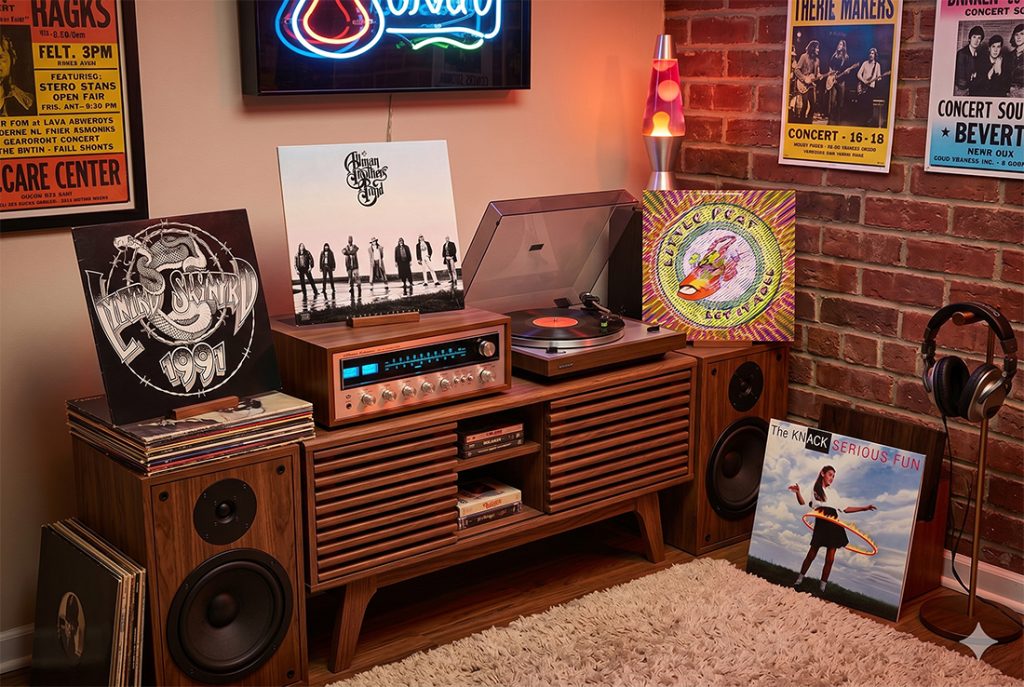
Classic Rock Tracks That Fell Through the Cracks
They may not have been classic rock songs then, but they are now!
There’s a strange thing that happens to rock bands who break up and get back together.
Fans want the hits. They want to hear the songs they already know.
So when a reunited band shows up with new material — sometimes their best material — the world kind of shrugs and waits for the next time the DJ plays the classic stuff.
That’s the story behind some genuinely great rock songs from the late 1980s and early 1990s.
Four bands — Lynyrd Skynyrd, The Allman Brothers Band, Little Feat, and The Knack — came back from the dead during that stretch and put out music that stood toe-to-toe with their classic work. In some cases, it was better.
None of it gets played on classic rock radio regularly. Most casual fans don’t even know it exists.
Let’s fix that.
Put on your rock n’ roll hard hat and dig it!
Lynyrd Skynyrd’s “Smokestack Lightning” (1991): The Return Nobody Saw Coming
The 1977 plane crash that killed Ronnie Van Zant, Steve Gaines, and Cassie Gaines didn’t just end Lynyrd Skynyrd’s career. It ended a chapter of American rock history.
For over a decade, the band’s name was more of a memory than a working entity.
Then 1991 happened.
The surviving members reformed in the late 80’s with Ronnie’s younger brother Johnny Van Zant on vocals.
They decided to record new material.
Nothing modern. Nothing chasing trends. Just their Southern rock meets classic rock sound.
The album they called Lynyrd Skynyrd 1991 wasn’t a greatest hits cash grab. It was a full studio effort — new songs, new arrangements, a serious attempt to move forward rather than just coast on nostalgia.
“Smokestack Lightning” is the standout.
And no — it’s not a cover of the Howlin’ Wolf tune.
It’s an original, written by Todd Cerney, Ed King, Gary Rossington, and Johnny Van Zant.
The thing that makes it work is the interplay between Billy Powell’s honky-tonk piano and the band’s triple-guitar attack.
The song hits hard right from the top — driving rhythm, gritty vocals, and that big Southern roadhouse energy that defined the classic Skynyrd records.
Johnny Van Zant doesn’t try to sound exactly like his brother. He sounds like himself, which is the right call.
It bridges the gap between 1970s Southern rock and the harder production style of the early ’90s in a way that doesn’t feel forced.
It sounds alive. It sounds like a band that still had something to say.
Most have never heard it. That’s a genuine shame.
The Allman Brothers Band’s “Good Clean Fun” (1990): A #1 Hit Nobody Remembers
Here’s a stat that should bother you: “Good Clean Fun” by The Allman Brothers Band hit number one on Billboard’s Album Rock Tracks chart in 1990.
Number one.
And it has since vanished from classic rock playlists so completely that you’d be forgiven for thinking it never existed.
The backstory makes the song even more interesting.
The Allman Brothers broke up messily in the early 1980s, done in by internal tension, personal problems, and a general creative stagnation.
They came back together in 1989 for their 20th anniversary — and they brought in two new members who changed everything.
Warren Haynes on guitar. Allen Woody on bass.
Haynes in particular was a revelation. His interplay with original guitarist Dickey Betts didn’t feel like a compromise or a patch job.
It felt like the band finally had the chemistry it needed. The resulting album, Seven Turns, was critically praised as a legitimate return to form.
“Good Clean Fun” is the best example of why. It opens with a slide guitar hook that sounds like it was ripped straight from the At Fillmore East era — raw, ferocious, immediately familiar.
The dual-lead guitar harmonies that made Southern rock a genre in the first place are all over it.
The vibe is pure forward motion, the kind of song that sounds best at high volume with the windows down.
Unlike a lot of Allman Brothers material, it’s not melancholy.
It’s celebratory — literally a song about the road, about being back together, about the simple joy of playing music.
That energy comes through.
One hit, no memory. That’s the reunion era problem in a nutshell.
Little Feat’s “Let It Roll” (1988): Proof That a Band Can Survive Anything
Losing Lowell George in 1979 should have been the end of Little Feat. He was the creative engine — the songwriter, the visionary, the voice.
When he died of a heart attack while on a solo tour, the band dissolved.
What else could they do?
Apparently, they could wait eight years, recruit a great new vocalist, and make one of the best albums of their career.
The 1988 reunion record Let It Roll brought in Craig Fuller, formerly of Pure Prairie League, to handle vocals and guitar.
Fuller wasn’t trying to be Lowell George — nobody could be — but he fit the band’s sound in a way that felt natural rather than calculated.
“Let It Roll” is the mission statement. It’s got the funky, swampy, syncopated groove that defines the Little Feat sound — what fans call the “Feat Beat” — and it doesn’t sound like a band trying to recreate old glories.
It sounds like a band that’s been away and has something to prove.
Producer George Massenburg gave it a clean, punchy sound that works for the era without stripping out the organic feel that makes Little Feat worth listening to.
The rhythm section is locked in. The keyboard work is intricate. The whole thing has a rolling, train-like momentum that the lyrics lean into.
Bill Payne, Paul Barrere, and Richie Hayward were always underrated.
“Let It Roll” is a reminder that the surviving members were extraordinary musicians who didn’t need Lowell George to make great records.
They needed time, a fresh voice, and a chance to breathe.
Little Feat made the most of it.
The Knack’s “Rocket of Love” (1991): The Power Pop Guys Go Hard Rock
The Knack had a weird problem. They were too good at one thing.
“My Sharona” in 1979 was such a massive cultural moment — number one for six weeks, cultural saturation, the whole thing — that it essentially swallowed the band.
Critics turned on them fast. The “Knuke the Knack” campaign was real. The backlash was brutal.
By 1991, they were operating with almost nothing to lose.
The album Serious Fun, produced by Don Was (who had recently revived both Bonnie Raitt’s and the B-52s’ careers), was a deliberate pivot. Less skinny-tie new wave. More muscle.
“Rocket of Love” is the track that best captures that shift.
It’s a hard rock stomper — heavy riffs, slower swagger, the kind of groove you’d expect from a Foghat or Bad Company record. It has almost nothing in common with the power pop that defined the band’s image.
That’s the point.
Doug Fieger and Berton Averre were always better musicians than their critics gave them credit for. “Rocket of Love” proves it.
The riff is relentless without being repetitive. The rhythm section drives it hard.
It reached number nine on the Mainstream Rock chart, which sounds like a modest showing until you remember that everyone had written this band off years earlier.
They had more range than anyone wanted to acknowledge. “Rocket of Love” is the evidence.
Why These Songs Disappeared – Never to See Classic Rock Radio for Long
Classic rock radio has a format problem. The format is essentially frozen somewhere between 1970 and 1979. Maybe a dusting of popular 80’s bands.
“Smokin’ in the Boysroom” anyone?
Bands are allowed to exist within that window.
Once they step outside it — even to make excellent music — the programming forces lose interest.
It’s not about quality. “Good Clean Fun” went to number one.
That’s not an obscure B-side — it’s a chart-topping rock song that somehow stopped getting played.
Classic rock radio just couldn’t accommodate the idea that a band with a legacy might still be growing.
There’s also the stigma of reunion.
Audiences came to the shows expecting the old songs, and the radio stations played the old songs, and the new stuff never had a real chance to find its footing.
It existed in a weird middle space — too new for the nostalgia crowd, too tied to legacy acts for the stations looking for fresh sounds.
The result is a classic rock blind spot the size of a decade.
Genuinely strong music from mature, experienced bands who had earned the right to make something interesting.
Worth digging into. All of it.
Explore These Albums and Essential Gear for the Classic Rock Fan
If these songs sent you down a rabbit hole — good. Here’s a selection of albums, vinyl pressings, and gear worth your time.
Lynyrd Skynyrd 1991 — Original CD | The full album that spawned “Smokestack Lightning.” Essential for fans who want to hear the band prove they still had it.
Seven Turns by The Allman Brothers Band — Vinyl LP | The critically acclaimed reunion record from 1990, featuring Warren Haynes and “Good Clean Fun.” A standout pressing for serious listeners.
Let It Roll by Little Feat — Remastered CD | The 1988 comeback record that proved the surviving members were more than a footnote. The title track is a masterclass in groove.
Serious Fun by The Knack — CD | The 1991 record produced by Don Was. “Rocket of Love” is the highlight, but the whole thing holds up better than its reputation suggests.
At Fillmore East by The Allman Brothers Band — Deluxe Vinyl | The gold standard of live Southern rock. Essential context for understanding what made the reunion material so significant.
Southern Rock Anthology — Multi-Artist Compilation CD | A great on-ramp for listeners who want to understand the genre before diving into the reunion-era deep cuts.
Audio-Technica AT-LP120XUSB Turntable | If you’re serious about spinning these records the way they were meant to be heard, this is a reliable, widely recommended entry-level audiophile turntable.
Sony MDR7506 Professional Studio Headphones | Flat response headphones that let you actually hear the piano-guitar interplay and slide work on these recordings without coloring the sound.
Rock and Roll Hall of Fame: The Definitive Collection Book | A deep-dive reference book that puts bands like The Allman Brothers and Lynyrd Skynyrd into cultural and historical context.
MUSE M50XT Bookshelf Speakers Pair | Compact, high-quality speakers that bring out the warmth in Southern rock recordings — particularly the low-end groove of “Let It Roll.”
Fender Player Stratocaster Electric Guitar | If this article made you want to pick up a guitar and figure out those slide licks yourself, the Player Strat is where most people start.
DigiTech Ricochet Whammy Pedal | For anyone wanting to experiment with the kind of pitch and slide sounds that define the Allman Brothers’ guitar work.
Behringer U-Phoria UM2 USB Audio Interface | For the aspiring home recording artist who wants to capture that warm, analog-adjacent sound these classic rock bands were known for.
Classic Rock Magazine | Physical media for the deep reader — with classic rock band profiles, gear rundowns, and reviews of albums like these from when they were current.
Disclaimer: This blog post contains affiliate links. If you click on one of these links and make a purchase, I may earn a small commission at no additional cost to you. Thank you for your support!
**Featured image is AI generated and hopefully does not violate any copyright laws.**