
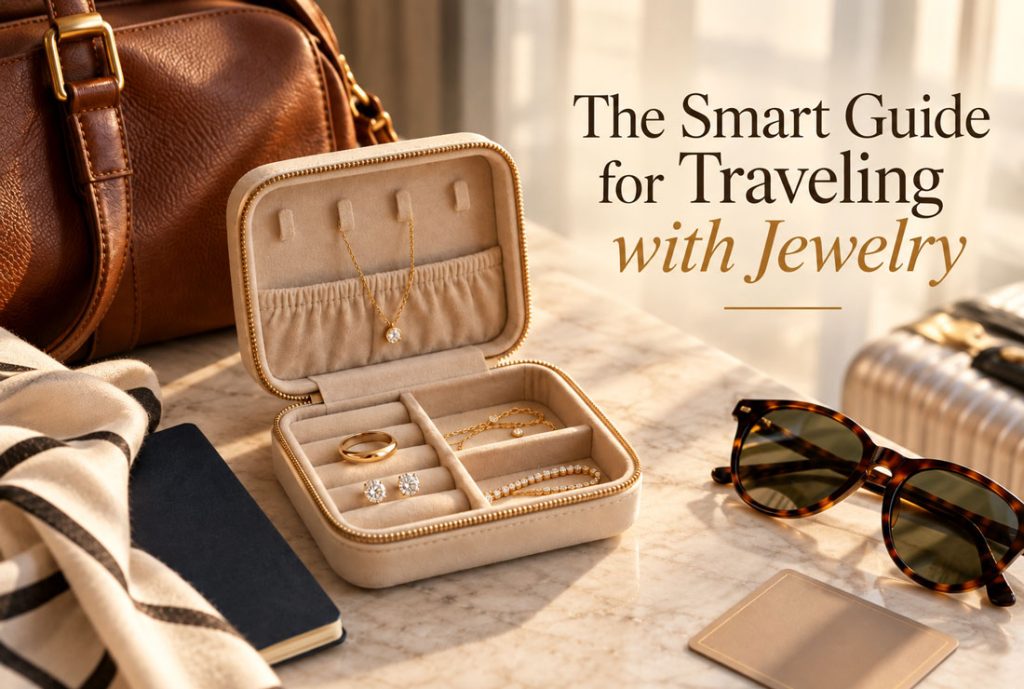
The Smart Guide for Traveling with Jewelry
Jewelry adds excitement and style to any vacation.
A favorite necklace, a wedding band, diamond studs, or a bold statement ring can easily complete an outfit and carry deep personal meaning.
But travel also creates hazardous situations your jewelry rarely faces at home.
Airport security screening, unfamiliar hotel rooms, sandy beaches, chlorinated pools, crowded tourist restaurants, and packed suitcases all present unique risks.
Many jewelry losses happen simply because travelers make hurried decisions at the last minute: tossing diamond earrings loosely into a makeup bag, packing a sentimental ring inside checked luggage, leaving a necklace sitting on a hotel bathroom counter, or wearing an engagement ring straight into the freezing ocean.
Traveling safely does not mean leaving your entire collection behind in a home safe.
It means packing smartly, knowing exactly when to remove certain pieces, and deciding which highly valuable items are simply not worth the risk.
Do You Really Need to Bring It?
Before packing anything, ask yourself whether the piece is truly necessary for the trip. The safest jewelry is often the jewelry you decide not to pack.
Think twice about bringing irreplaceable family heirlooms, highly sentimental pieces, expensive antique jewelry, or delicate gemstone rings.
Full bridal sets and highly expensive luxury watches often attract unwanted attention in unfamiliar cities.
If you are heading to the beach, leave your pearls and opals at home, as sand and saltwater will quickly ruin them.
Adopt a safer travel mindset: bring only the jewelry you will actually wear, not every piece you might possibly want to wear.
Make a Jewelry Travel Inventory Before You Leave
If a piece of jewelry is lost, stolen, or damaged during a trip, you must know exactly what you brought. Making a travel inventory takes only a few minutes and saves massive stress later.
Lay out everything you plan to bring and photograph it all together.
Take clear close-up photos of each individual piece, highlighting any unique stones or engravings. Note where each piece will be packed.
Gather your documentation for high-value items.
This includes copies of receipts, appraisal documents, diamond grading reports, insurance policy information, watch serial numbers, and diamond laser inscription numbers.
Keep these records saved digitally on your phone.
Check Your Jewelry Insurance Before the Trip
Standard homeowners or renters insurance often carries strict limits for jewelry, especially for “mysterious disappearance” or travel-related loss. Dedicated jewelry insurance usually offers much broader coverage.
Before traveling, ask your insurance provider specific questions.
Is your jewelry covered internationally?
Is accidental damage covered?
Are there coverage limits?
Do you need an updated appraisal before leaving?
A 2025 travel study by Jewelers Mutual Group identified beaches, hotel rooms, and earrings as common risk areas for travelers.
The study noted that many travelers wear “travel jewelry” or duplicates to avoid risking their most expensive or sentimental pieces. Insurance cannot prevent a loss, but it protects you financially if the worst happens.
Use Travel Jewelry When It Makes Sense
Travel jewelry includes lower-risk pieces that look stylish but do not carry the same heavy emotional or financial value as your most important heirlooms.
Examples of travel jewelry include wearing a flexible silicone wedding band instead of your heavy gold ring, or wearing a simple gold band instead of a towering diamond bridal set.
Many choose to travel with a moissanite or lab-grown diamond ring, leaving their natural diamond engagement ring locked safely at home.
You might pack fun costume earrings for a beach trip instead of your real diamond studs, or wear a stainless steel watch instead of a luxury timepiece.
Travel jewelry is especially smart for beach vacations, cruises, international travel, adventure trips, destination weddings, and any trip involving constant packing and unpacking.
Never Pack Valuable Jewelry in Checked Luggage
This is the strongest rule of travel: highly valuable jewelry should stay with you at all times.
Checked luggage can easily be lost, delayed, opened for random inspection, heavily damaged, mishandled by baggage teams, or sent to the wrong destination.
The Transportation Security Administration (TSA) specifically advises travelers with valuable items such as jewelry to keep those items with them at all times and not place them in checked baggage.
Keep your jewelry safely tucked inside your carry-on bag, your personal item, or worn on your body.
Airport Security: What You Should Know
Do not panic at the TSA checkpoint. Most everyday fine jewelry can usually be worn straight through security without setting off the metal detectors.
Jewelers Mutual notes that the TSA actually encourages travelers to keep their jewelry on.
If a large piece of jewelry does trigger an alarm, a TSA officer can inspect the item while you watch.
If you do choose to remove your jewelry before walking through the scanner, never place rings or watches loose inside a plastic bin or bowl.
Those bins are dirty, and small items easily bounce out or get left behind in the rush.
Instead, place your jewelry securely inside a small pouch and zip it deep inside your carry-on bag before you even reach the security checkpoint.
How to Pack Jewelry Safely
A dedicated travel jewelry case prevents tangles, deep scratches, bent earring posts, broken chains, and missing earring backs.
Jewelers Mutual strongly recommends using a travel jewelry case, packing only what you will realistically wear, and keeping the case securely inside your carry-on luggage.
Look for a compact case featuring padded ring slots, specific necklace tabs, earring panels, zipper compartments, and a soft interior lining.
Never toss fine jewelry loosely into a makeup bag.
Do not wrap valuable rings in hotel tissue paper, as it is incredibly easy to accidentally throw away.
Never pack diamond rings touching pearls or softer gemstones, as the diamonds will quickly scratch them.
How to Pack Rings, Necklaces, and Earrings
Rings are small, highly valuable, and incredibly easy to lose. Give each ring a secure, padded place in a travel box.
Full eternity bands need extra protection because diamonds wrap around the entire ring, making them vulnerable to impact from all sides.
Necklaces are the easiest category of jewelry to damage while traveling. Chains knot, kink, and snap constantly.
Use necklace tabs in a travel case, and always clasp each necklace before packing it.
Keep heavy pendants separated from thin, delicate chains. Never store multiple chains together in one loose pouch.
Earrings are notorious for losing their backs. Always keep pairs together.
Use earring cards, a small divided case, or the “button method” (pushing the posts through the holes of a spare button) for studs.
Be Careful With Jewelry in Hotels
Hotel rooms are major loss zones.
Jewelry frequently goes missing because travelers take off rings and leave them sitting on nightstands, bathroom counters, towels, beds, or near the sink drain.
Jewelers Mutual recommends using hotel room safes whenever you are not actively wearing your jewelry.
Place your jewelry back inside your travel case before putting it into the safe to keep it organized.
Do not leave loose pieces scattered on the bathroom counter for housekeeping to accidentally sweep away.
Always double-check the safe before checkout, and set a phone reminder for the morning of your departure.
Avoid Wearing Jewelry in Pools, Hot Tubs, and the Ocean
The beach and the pool are among the absolute worst places for fine jewelry.
Chlorine aggressively attacks gold alloys, weakening prongs and ruining shiny finishes. Hot tubs combine these harsh chemicals with extreme heat, accelerating the damage.
The ocean presents multiple terrifying risks. Cold water physically shrinks your fingers, making it incredibly easy for a heavy engagement ring to slip off unnoticed into the waves.
Abrasive sand quickly scratches polished metal. Thick sunscreen creates a cloudy, stubborn buildup underneath diamonds.
If jewelry falls off in the ocean, recovery is usually impossible.
Always remove your fine jewelry before swimming.
Do Not Wear Fine Jewelry During Adventure Activities
Vacation activities often put your jewelry under far more stress than everyday life.
Remove your fine jewelry before hiking, snorkeling, boating, zip-lining, skiing, kayaking, rock climbing, cycling, or horseback riding.
Wearing jewelry during these activities leads to bent ring shanks, chipped stones, lost earrings, broken chains, and severe physical injury if a ring snags on equipment.
Destination Weddings: Special Jewelry Travel Concerns
Destination weddings involve a massive amount of valuable jewelry, including engagement rings, wedding bands, bridal earrings, groomsmen gifts, and heirloom pieces.
Carry all wedding bands personally in your carry-on luggage. Assign one highly responsible person to hold the wedding bands on the day of the ceremony.
Do not leave rings sitting loose near makeup stations, flowers, shoes, garment bags, or photography props where they can easily be knocked onto the floor and lost.
Keep insurance documents highly accessible.
Cruises and Resort Travel
Cruises and resorts tempt travelers to bring far more jewelry than usual, but they also create more chances to lose it.
Cruise cabins are exceptionally small, making it easy to accidentally leave jewelry inside narrow drawers. Pool days, spa treatments, and open-air dining increase the risk of loss or damage.
Bring a very small, curated jewelry wardrobe. Use simple travel jewelry for daytime activities, and reserve your fine jewelry for controlled evening dinners.
International Travel and Customs Considerations
When traveling internationally with extremely high-value jewelry, carrying documentation proving ownership is a smart move.
Helpful documents include copies of your receipts, appraisals, insurance schedules, photos, grading reports, and serial numbers for luxury watches.
Before traveling internationally with very expensive pieces, check the current customs guidance for your specific destination to avoid confusion when crossing borders.
Jewelry and Travel Outfits: Avoid Looking Like a Target
Flashy jewelry draws unwanted attention in unfamiliar cities. Travel is not always the best time to display your most valuable, recognizable pieces.
Consider leaving behind massive diamond necklaces, highly recognizable luxury watches, oversized gold chains, multiple stacked diamond bracelets, and obvious luxury logos.
Choose simple, highly versatile pieces that work across multiple outfits without attracting unnecessary attention.
Protect Jewelry From Lotions, Sunscreen, Perfume, and Sweat
Vacations usually involve heavy applications of sunscreen, bug spray, perfume, and hair products.
These products quickly dull diamonds, coat gemstones in a cloudy film, permanently damage pearls, discolor porous stones, and build up thickly under ring settings.
Apply your products first, let them dry completely, and then put your jewelry on.
Always wipe your jewelry gently with a soft cloth after wearing it to remove sweat and residue.
Be Careful With Pearls and Delicate Gemstones While Traveling
Pearls, opals, emeralds, turquoise, and porous stones require extreme caution while traveling.
Pearls are severely damaged by perfume, hairspray, sunscreen, sweat, and abrasion. Store them securely in a soft pouch and wipe them clean after wearing.
Avoid exposing opals to intense heat, dryness, or sudden temperature changes. Keep emeralds away from any hard impact and harsh chemicals.
If your itinerary involves heavy activity, leave the delicate stones safely at home.
What to Do If Jewelry Is Lost While Traveling
If you lose a piece of jewelry, act quickly. Retrace your steps immediately.
Check the hotel safe, the nightstand, the bathroom counter, the sink area, tangled in the bedsheets, inside a pile of towels, deep in your suitcase pockets, the rental car, the restaurant table, the airport security area, and the bottom of your beach bag.
Depending on the situation, notify hotel security, contact the airline or airport lost and found, and file a police report if you suspect theft.
Finally, contact your insurance provider to begin the claims process. The faster you respond, the better the chance of recovery or documentation for a claim.
What to Do If Jewelry Is Damaged While Traveling
If a stone feels loose, a prong bends, a chain snaps, or a clasp feels weak, stop wearing the piece immediately.
Place the damaged jewelry in a small zip pouch or container so loose stones do not disappear.
Do not attempt quick fixes using glue, tape, pliers, or random hotel-room tools on your fine jewelry.
Keep it safely packed away, and visit a professional, trusted jeweler as soon as you return home.
What to Do When You Return Home
Jewelry travel safety does not end when your suitcase is unpacked.
Check your travel inventory and confirm every piece you brought returned home with you.
Inspect your jewelry carefully for loose stones, bent prongs, chain kinks, scratched metal, missing earring backs, or heavy sunscreen buildup.
Clean your jewelry safely using methods appropriate for the specific stones. Do not use harsh cleaning chemicals just because the jewelry looks dull from vacation grime.
Visit your local jeweler for a professional inspection, especially after beach trips or travel involving daily-wear engagement rings.
Common Travel Jewelry Mistakes
Most travel jewelry problems stem from convenience decisions made in a hurry.
Bringing too much jewelry means having more items to track, pack, protect, and potentially lose. Packing jewelry in checked luggage is the biggest, most avoidable risk.
Removing jewelry loose at airport security guarantees small pieces will be forgotten or stolen.
Wearing rings in the freezing ocean makes ring loss extremely common.
Leaving jewelry scattered on hotel bathroom counters makes it easy for pieces to be swept away with the towels.
Questions to Ask Before Traveling With Jewelry
Value: Would I be absolutely devastated if this piece were lost? Is it insured? Is it replaceable?
Trip: Am I going to the beach? Will I be swimming or hiking? Will I have access to a secure hotel safe?
Packing: Can I fit this easily in my carry-on? Are my chains separated to prevent knots?
Wearing: Will this attract unwanted attention? Should I wear a silicone travel ring instead?
The Safest Approach to Traveling With Jewelry
Traveling safely with jewelry is not about living in fear; it is simply about smart planning.
Jewelry gets lost when travelers bring too much, pack too quickly, trust checked luggage, or wear highly valuable rings into oceans, gyms, and crowded tourist areas.
The smartest approach is simple: bring only what you will actually wear, leave irreplaceable family pieces at home, photograph what you pack, keep all valuables tightly controlled in your carry-on, use a proper padded travel case, and use the hotel safe consistently.
For engagement rings, wedding bands, and expensive watches, securing proper insurance adds a vital layer of protection.
Jewelry should add enjoyment and style to a trip, not anxiety.
With a little preparation, you can travel with absolute confidence while fully protecting the pieces that matter most.
Related Amazon Products for Safe Jewelry Travel
Bagsmart Travel Jewelry Organizer Case
Keep your engagement rings, necklaces, and earrings perfectly secure, padded, separated, and untangled while traveling for vacations or weekend getaways.
ROQ Silicone Wedding Band Multipack
Protect your fine jewelry from heavy impact and loss! Swap your diamond engagement ring for a safe, flexible silicone band during beach trips, swimming, or gym workouts.
Diamond Dazzle Stik Cleaning Pen
A highly portable, twist-brush cleaning solution designed to safely reach beneath tight diamond prongs and wash away heavy vacation sunscreen and lotion buildup on the go.
ProCase Hard Shell Travel Jewelry Case
A rigid, hard-shell compact travel box designed specifically to protect delicate gemstone rings, watches, and easily crushed hoop earrings inside a packed carry-on bag.
Mayflower Microfiber Jewelry Polishing Cloths
A gentle, chemical-free way to quickly wipe away daily vacation sweat, fingerprints, and sunscreen from delicate stones and safely restore the shine to gold settings.
Anti-Tarnish Jewelry Storage Bags (Clear)
Small, transparent zip-lock style bags specifically treated to prevent oxidation and tarnish, perfect for isolating individual silver chains inside a larger travel case to prevent tangling.
Feramox Invisible Ring Size Adjusters
A comfortable, clear, and temporary solution if your engagement ring fits slightly too loose, providing instant security so the ring doesn’t slip off during travel.
SentrySafe Compact Portable Travel Safe
A small, heavy-duty portable lockbox with a tethering cable, designed specifically to properly and safely secure your valuable jewelry inside a hotel room or rental car.
Benevolence LA Plush Velvet Travel Jewelry Box
A small, elegant velvet travel case featuring dedicated ring rolls and earring compartments, perfect for safely transporting minimal bridal jewelry to a destination wedding.
Connoisseurs Jewelry Cleaning Wipes
Dry, disposable jewelry cleaning wipes perfect for carrying in a purse or beach bag to quickly polish gold and silver jewelry without needing water or liquid cleaners.
Frequently Asked Questions About Traveling With Jewelry
Is it safe to travel with expensive jewelry?
It can be, but the safest approach is to be selective.
Bring only the jewelry you expect to wear and think carefully before packing irreplaceable heirlooms, antique pieces, highly sentimental jewelry, or especially expensive watches and diamond pieces.
The more valuable or difficult an item would be to replace, the more reason there is to consider leaving it securely at home.
Should I put jewelry in my checked luggage?
No. Valuable jewelry should remain with you.
Checked bags can be delayed, lost, damaged, opened for inspection, or sent to the wrong destination. Keep fine jewelry in your carry-on bag, personal item, or on your body rather than placing it inside checked luggage.
Can I wear jewelry through airport security?
Most everyday fine jewelry can generally remain on while going through airport security.
If you decide to remove a ring, watch, necklace, or other piece, do not place it loose inside a security bin. Put it into a secure pouch or jewelry case inside your carry-on before reaching the screening area.
That reduces the chance of leaving something behind during the rush to collect your belongings.
What is the best way to pack jewelry for travel?
Use a dedicated travel jewelry case with separate areas for rings, necklaces, earrings, and other small pieces.
Look for padded ring slots, necklace holders, earring panels, zippered compartments, and a soft lining.
Separating pieces is especially important because harder stones and metals can scratch softer jewelry during travel.
How do I keep necklaces from tangling in my suitcase?
Clasp every necklace before packing it and secure it individually inside a travel case.
Avoid putting several chains together in one loose pouch. Thin chains can knot around each other, while heavy pendants can bend or damage more delicate chains.
How should I pack earrings?
Keep each pair together and make sure the backs are secured.
A divided jewelry case or earring card works well. Stud earrings can also be pushed through the holes of a spare button to help keep the pair together while traveling.
How should I pack rings?
Give every ring its own secure, padded space.
Rings are small enough to disappear quickly inside luggage, hotel rooms, or handbags. Diamond eternity bands deserve extra protection because stones and settings surround the entire ring and can be exposed to impact from every direction.
Should I photograph my jewelry before traveling?
Yes.
Take a clear photograph of everything you are bringing, along with close-up photographs of individual pieces.
For high-value jewelry, keep copies of useful documentation such as receipts, appraisals, grading reports, insurance information, watch serial numbers, or diamond inscription numbers where applicable.
Digital copies can make it easier to identify a piece if something is lost, stolen, or damaged.
Does homeowners or renters insurance automatically cover jewelry while traveling?
Not necessarily.
Coverage can vary, and standard policies may place limits on jewelry losses or certain types of claims.
Before leaving, contact your insurance provider and ask whether your jewelry is covered while traveling, including internationally if applicable. You should also ask about accidental damage, coverage limits, appraisal requirements, and loss away from home.
What is “travel jewelry”?
Travel jewelry is jewelry you are comfortable wearing away from home without risking your most valuable or sentimental pieces.
For example, someone might wear a silicone wedding band instead of a valuable gold ring, choose a simple band instead of a full bridal set, or wear costume earrings instead of diamond studs.
The idea is not necessarily to wear inexpensive jewelry. It is to reduce the emotional and financial consequences if something disappears or becomes damaged.
Should I wear my engagement ring to the beach?
It is generally safer not to.
Cold ocean water can cause fingers to temporarily shrink, making a ring easier to lose. Sand can scratch polished metal, while sunscreen can collect underneath settings and around stones.
If a ring comes off in the ocean, recovering it can be extremely difficult.
Can I wear gold jewelry in a swimming pool?
Fine jewelry is better removed before swimming.
Chlorinated pool water can damage gold alloys and potentially weaken components such as prongs over time. Hot tubs add high temperatures to the chemical exposure.
For valuable rings and other fine jewelry, removing them before getting into the water is the safer choice.
Is it safe to wear jewelry while snorkeling, hiking, skiing, or doing other vacation activities?
Usually, the safer option is to remove fine jewelry before active or adventure-oriented activities.
Activities such as snorkeling, boating, hiking, skiing, kayaking, rock climbing, cycling, and horseback riding can expose jewelry to hard impacts, snagging, sudden loss, or damage.
A ring caught on equipment can also create a safety risk to your hand.
Should I use the hotel room safe for jewelry?
When you are not wearing valuable jewelry, a hotel room safe can provide a more controlled place to store it than a bathroom counter, nightstand, suitcase, or drawer.
Keep the jewelry inside its travel case before placing it into the safe.
Before checking out, make checking the safe part of your departure routine. A phone reminder can help prevent accidentally leaving valuables behind.
What are the most common places travelers lose jewelry in hotel rooms?
Bathroom counters, nightstands, beds, towels, sinks, drawers, and hotel safes are all places that deserve a careful check.
Jewelry can also become tangled in bedsheets, rolled into towels, dropped into luggage pockets, or accidentally packed into unusual places during a hurried checkout.
Keeping jewelry in one consistent storage location makes it easier to track.
Should I travel with pearls?
You can, but pearls require extra care.
Perfume, hairspray, sunscreen, sweat, and abrasion can all damage their surface. If you bring pearls, store them separately in a soft pouch, keep them away from cosmetics and chemicals, and gently wipe them after wearing.
For trips centered around beaches, pools, and heavy outdoor activity, leaving delicate jewelry at home may be the easier option.
What gemstones require extra care while traveling?
Pearls, opals, emeralds, turquoise, and other delicate or porous stones deserve additional caution.
Heat, sudden temperature changes, chemicals, sunscreen, impact, and abrasion can affect different gemstones in different ways.
If your trip involves lots of swimming, outdoor activities, or frequent packing and unpacking, delicate gemstone jewelry may be better left safely at home.
Can sunscreen damage jewelry?
Sunscreen may not permanently damage every type of jewelry, but it can create heavy buildup around settings and leave diamonds and gemstones looking cloudy.
Perfume, bug spray, hair products, lotions, and sweat can create similar problems and can be particularly troublesome for delicate or porous materials.
Apply personal-care products first. Allow them to dry, and then put your jewelry on.
Is it safer to wear a silicone wedding band while traveling?
For some trips, yes.
A silicone band can be useful during beach vacations, hiking trips, adventure travel, exercise, boating, or other situations where you would prefer not to risk a valuable wedding band.
It can also reduce concerns about damaging or losing a sentimental ring during active parts of your trip.
Should I take my full bridal set on vacation?
Consider whether you actually need it.
A large engagement ring, wedding band, and additional diamond bands may be perfectly appropriate for certain trips, but they also create more items to protect.
For beach trips, cruises, adventure vacations, or travel involving frequent hotel changes, a simpler wedding band or travel ring may be easier to manage.
How should I travel with wedding rings for a destination wedding?
Keep the wedding bands with you in your carry-on luggage rather than checking them.
On the wedding day, place one responsible person in charge of the rings and avoid leaving them loose near makeup stations, flowers, garment bags, shoes, or photography props.
Destination weddings can involve many valuable items moving between hotel rooms, ceremony areas, dressing rooms, and reception spaces, so keeping responsibility clear is especially important.
Should I bring expensive jewelry on a cruise?
You can, but bringing a small, carefully selected jewelry wardrobe is easier to manage.
Cruise cabins can be tight, and passengers frequently move between pools, spas, restaurants, shore excursions, and onboard activities.
Consider using simpler travel jewelry during the day and saving fine jewelry for dinners or other controlled situations.
Do I need documentation when traveling internationally with expensive jewelry?
Documentation can be helpful when traveling internationally with particularly valuable pieces.
Keep copies of appraisals, receipts, photographs, insurance information, grading reports, and watch serial numbers when relevant.
Customs requirements can vary by destination, so travelers carrying unusually expensive jewelry should check current requirements before departure.
Can expensive jewelry make me more noticeable while traveling?
Yes.
Highly recognizable watches, oversized gold chains, large diamond pieces, multiple diamond bracelets, and obvious luxury designs can attract attention.
When traveling somewhere unfamiliar, simple pieces that work with several outfits may be a more practical option than bringing an entire collection of highly recognizable jewelry.
What should I do if I lose jewelry while traveling?
Act immediately.
Retrace your steps and carefully check your hotel room, safe, bathroom, bedding, towels, luggage pockets, rental car, restaurant table, airport security area, beach bag, and anywhere else you recently removed or handled the piece.
Contact hotel security, the airline, airport lost and found, or other appropriate personnel as quickly as possible.
If you believe the jewelry was stolen, a police report may also be necessary. Contact your insurer promptly if you need to make a claim.
What should I do if my jewelry is damaged during a trip?
Stop wearing it.
If you notice a loose stone, bent prong, broken chain, damaged clasp, or another problem, place the piece securely inside a small pouch or container.
Do not try to repair fine jewelry using glue, tape, pliers, or improvised hotel-room tools. A temporary fix can sometimes turn a small repair into a much larger one.
Keep the piece secure until it can be inspected by a professional jeweler.
Should I have my jewelry inspected after a vacation?
It can be a good idea, particularly after beach vacations or trips where jewelry has been exposed to sand, swimming, outdoor activities, or heavy daily wear.
When you get home, compare your jewelry with your travel inventory and inspect each piece for loose stones, bent prongs, scratches, damaged chains, missing earring backs, or product buildup.
A professional jeweler can examine pieces more closely if you suspect damage.
What is the biggest mistake people make when traveling with jewelry?
Many problems begin with bringing too much jewelry and then making rushed decisions about where to put it.
Loose rings placed in airport bins, earrings thrown into makeup bags, necklaces left on hotel counters, and valuable jewelry packed inside checked luggage are all easily avoidable situations.
Creating a simple routine before the trip makes a major difference.
What jewelry should I leave at home?
Consider leaving behind anything you would consider emotionally or financially devastating to lose.
That may include irreplaceable family heirlooms, valuable antiques, especially delicate gemstones, highly recognizable luxury watches, and expensive pieces that do not serve a real purpose during your trip.
The safest piece of travel jewelry is sometimes the one that never leaves home.
What is the easiest jewelry travel routine to follow?
Keep it simple.
Bring only what you know you will wear. Photograph everything before leaving. Keep valuable pieces in your carry-on. Pack them in a padded jewelry case. Use the hotel safe consistently. Remove fine jewelry before swimming or strenuous activities. Check your safe and travel case before checkout.
The goal is not to worry about jewelry throughout your vacation. It is to make a few smart decisions beforehand so you can enjoy the trip without constantly wondering where your jewelry is.
Sources
- Transportation Security Administration (TSA) – Security Screening
Description: Official U.S. government guidelines detailing airport security protocols, explicitly advising passengers to keep all high-value items, including fine jewelry, strictly within personal carry-on bags rather than checked luggage.
Link: https://www.tsa.gov/travel/security-screening - Jewelers Mutual Group – Traveling With Jewelry
Description: A leading jewelry insurance provider offers practical risk-management advice, reporting on consumer travel habits and highlighting beaches, hotel rooms, and improper packing as the primary causes of jewelry loss during vacations.
Link: https://www.jewelersmutual.com/the-jewelry-box/traveling-with-jewelry - American Gem Society (AGS) – Caring for Your Fine Jewelry
Description: Consumer protection guidelines from a premier gemological authority, outlining the necessity of routine maintenance, the structural risks of tangled chains during transit, and the hazards of exposing jewelry to harsh pool chemicals and ocean environments.
Link: https://www.americangemsociety.org/buying-diamonds-with-confidence/caring-for-your-fine-jewelry/
Disclaimer: This blog post contains affiliate links. If you click on one of these links and make a purchase, I may earn a small commission at no additional cost to you. As an Amazon Associate I earn from qualifying purchases. Thank you for your support!