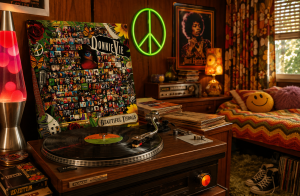

Billy Squier’s Don’t Say No: The Beats, Hits, and Video That Came Later
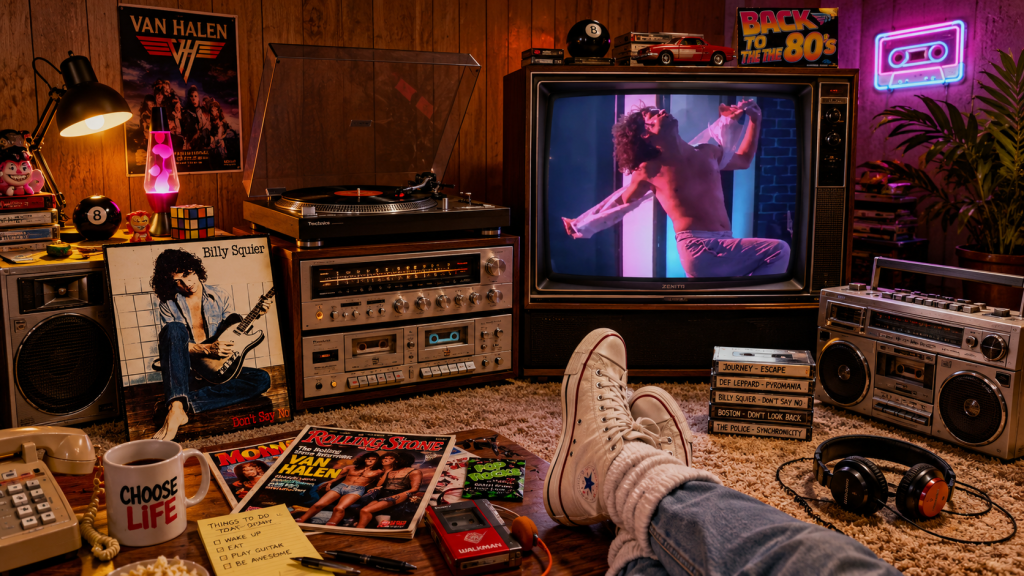
If you spent any time listening to rock radio in the early 1980s, you already know the sound.
It starts with a massive, echoing drum beat that hits you right in the chest. Then comes a snarling, blues-drenched guitar riff that practically forces you to turn the volume dial all the way to the right.
Billy Squier didn’t just write a few hit songs. He laid down the architectural framework for an entire decade of arena rock.
When Don’t Say No hit record stores in April of 1981, you could feel the landscape shifting. He found a way to bridge the gap between loud 1970s blues-rock and the radio-friendly sound that MTV was about to turn into a global phenomenon.
But for decades, the story surrounding Billy Squier has been hijacked by a single, heavily mocked music video.
You probably know the one. Reducing a career this massive and influential to a four-minute wardrobe choice isn’t just unfair – it totally ignores the actual truth.
Billboard’s music charts don’t lie!
Grab a beer. Maybe a hot dog. Let’s dig into the real story.
We’re going to dig into what makes Don’t Say No such a bulletproof rock record.
We’ll also look at the crazy twist of fate that turned a Boston rocker into a foundational pillar of early hip-hop.
But above all, we’re going to look at the actual chart data to finally put that “career-killing video” myth to bed.
But I have to ask – will anyone really listen?
There is a reason why conspiracy theories go viral.
The Long Road to the Big Beat
Musical thunderbolts rarely happen overnight. They usually come from years of grinding in the background, making mistakes, and figuring out what actually works on stage.
Born in 1950 and raised in suburban Boston, Squier caught the same British Invasion fever as everyone else.
But while his fellow rock star wanna-be’s were playing sloppy cover songs in their garages, Squier was actively hunting for something different.
His early career reads like a crash course in the music business.
He spent time in New York with Magic Terry & the Universe, trying to merge avant-garde poetry with loud rock and roll. He eventually surfaced in the Sidewinders, a Boston power-pop outfit fronted by Andy Paley.
But the real precursor to his massive solo success was a band called Piper.
Piper was a three-guitar rock outfit managed by the same crew behind Kiss. The band gave Squier the runway to really figure out how to be a frontman, write his own material, and handle the arrangements.
Because they were opening arena shows for major acts, he essentially got a front-row education in how to win over twenty thousand screaming fans night after night.
Even though Piper cut a couple of killer records for A&M, they never managed to catch fire on a national level. Looking at it now, it was really just a Billy Squier solo vehicle disguised as a rock group.
When the band finally dissolved, Squier took the ultimate leap.
He secured a modest demo budget from Capitol Records, proved he could handle the spotlight alone, and released The Tale of the Tape in 1980.
That debut album featured a track called “The Big Beat.” It was loud. It was expansive.
And it featured a drum intro so colossal that it would eventually rewrite the rulebook for an entirely different genre of music.
Squier was inching closer to the exact sound he wanted. He just needed one more element to bring it all into focus.
Enter Reinhold Mack and the Creation of a Masterpiece
To capture lightning in a bottle in the studio, you need the right producer.
Queen guitarist Brian May, a good friend of Squier’s, was originally slated to produce the next album.
When scheduling conflicts got in the way, May recommended a German engineer and producer named Reinhold Mack.
Mack had just worked with Queen on their last truly successful album The Game.
He possessed a brilliant ear for spatial audio. He knew exactly how to make instruments sound impossibly large without muddying up the mix.
The dude should be a household name alongside Bob Ezrin, Mutt Lange, Bob Rock, Bruce Fairbairn and Tom Werman.
When Mack teamed up with Squier, drummer Bobby Chouinard, bassist Mark Clarke, and keyboardist Alan St. Jon, everything clicked into place.
The result was Don’t Say No. Released in the spring of 1981, it was an immediate, resounding triumph. Let’s look at exactly why this album remains a flawless piece of classic rock history.
Don’t Say No Side One: The Arena Rock Blueprint
The first side of Don’t Say No is arguably one of the greatest programming sequences in rock history. It is a relentless, hit-packed ride that never lets up.
“In the Dark”
“In the Dark” starts with this low, lingering synth drone that suddenly rips open into heavy, layered guitars. It’s the perfect intro that lets you know exactly what the record is going to deliver. The song didn’t struggle to find an audience, either—it coasted straight into the Billboard Top 40 and immediately took over FM radio.
“The Stroke”
There’s no mistaking “The Stroke.” You know it within two beats—that heavy, stomping rhythm and those shouted group vocals were practically custom-built for big arenas. Instead of just writing another standard party track, Squier used it to rip into the corporate parasites running the record business. That edge struck a real nerve with listeners, carrying the song to number 17 on the Hot 100 and into constant rotation on MTV.
“My Kinda Lover”
Following up a massive anthem is tough. Squier delivered with a track full of swagger and an undeniably catchy melodic hook.
“You Know What I Like”
This track leans into a slightly off-kilter groove. It keeps the energy high while showing off the tight interplay between the rhythm section and the guitars.
“Too Daze Gone”
Closing out the first side, this song feels like a smoky, late-night jam session. It perfectly transitions the listener toward the second half of the record.
Don’t Say No Side Two: Depth and Vulnerability
If side one was built for FM radio, side two was built for the hardcore music fans who wanted to see what else Squier could do.
“Lonely Is the Night”
This song just cooks. It grabs all that heavy energy from the first half of the record and locks it into one massive, undeniable groove. Even though it was never actually released as an official single, fans loved it so much that it naturally became one of his absolute signature hits.
“Whadda You Want from Me”
The momentum keeps rolling with this grinding, swaggering rocker. It locks perfectly into Squier’s unmistakable vocal identity.
“Nobody Knows”
“Nobody Knows” is the moment you realize Squier isn’t just a guy who writes loud guitar hooks. Dedicated to John Lennon shortly after he passed, the song strips everything back to a simple acoustic guitar and a surprisingly gentle falsetto. It showed everyone that he could handle a quiet, emotional track just as well as the heavy stuff.
“I Need You”
A highly melodic, warm track that provides a quiet exhale before the grand finale.
“Don’t Say No”
The title track closes the album by surging forward. It blends hard and soft dynamics perfectly, leaving you wanting to flip the record over and start again.
Don’t Say No peaked at Number 5 on the Billboard album chart. It stayed on the charts for a staggering 111 weeks. It was certified Gold by July 1981, Platinum by September, and eventually received a Triple Platinum award for selling over three million copies in the United States alone.
The Accidental Hip-Hop Pioneer
While rock fans were packing arenas to see Squier play his hits, a completely different musical revolution was happening in the boroughs of New York City.
Early hip-hop DJs and producers were searching through crates of vinyl. They were looking for the perfect drum breaks to loop and rhyme over.
Because Squier arranged his music with a rhythm-first mentality, his records were an absolute goldmine. His drummer, Bobby Chouinard, had a heavy, distinct foot. Mack’s production style left plenty of open space in the mix.
“The Big Beat,” that deep cut from his 1980 debut album, became the holy grail of hip-hop drum loops. Squier and Chouinard created the sound by layering heavy drums with the sound of Squier hitting an empty snare flight case with his bare hands.
Or so they say.
The boom-bap rhythm was lifted by Run-D.M.C. in 1983 for “Here We Go (Live at the Funhouse).” It anchored the massive “Roxanne Wars” saga via UTFO’s “Roxanne, Roxanne.” By 1988, Big Daddy Kane used it to build his masterpiece “Ain’t No Half-Steppin'”.
The sampling continued heavily into the 1990s. A Tribe Called Quest layered it into “We Can Get Down.” Puff Daddy used it for “Can’t Nobody Hold Me Down.”
In 2003, super-producer Rick Rubin recognized the raw power of the drum break. He used it as the instrumental foundation for Jay-Z’s generational hit “99 Problems.” UK grime pioneer Dizzee Rascal rode the exact same loop on “Fix Up, Look Sharp,” and Alicia Keys built her global pop hit “Girl on Fire” around it.
“The Stroke” received similar treatment. The heavy, stadium-sized crunch provided the perfect energy for rap anthems. Eminem heavily sampled the track—both the drums and the iconic guitar riff—for his 2013 hit “Berzerk.”
It’s crazy to think about, but Squier’s sound is an absolute cornerstone of early hip-hop. When rock radio eventually got distracted by hair metal and grunge, the rap world basically adopted his records.
DJs kept his heavy drum breaks in constant rotation for decades.
Because of that, he ended up getting serious street cred—and some huge royalty checks—from a totally different neighborhood of the music business.
The “Rock Me Tonite” Video: Deconstructing the Myth
If you are talking about 1980s rock history, there is an unavoidable elephant in the room. We have to talk about the 1984 music video for “Rock Me Tonite.”
The way the myth is usually spun, Squier was basically on top of the rock world. Then he drops a new video featuring him dancing around a brightly colored bedroom in a pink shirt and grabbing a feather boa.
The story claims that his classic rock fanbase took one look at it, completely rejected him, and his career was dead in the water overnight.
It is a very dramatic story. It is also completely factually incorrect.
Did the video damage his credibility with the hardcore rock crowd? Absolutely. The aesthetic was a massive departure from the gritty, working-class image his fans expected.
Critics labeled it wimpy. Comedians used it as a punchline. In the hyper-masculine world of rock and roll, the visual choices directed by Kenny Ortega were a genuine misstep.
But a misstep is not a death sentence. Let’s look at the actual data.
The album that featured “Rock Me Tonite” was called Signs of Life. Despite the intense mockery of the music video, Signs of Life went Platinum.
It peaked at Number 11 on the Billboard 200 chart and stayed on the charts for almost a full year.
Do you like apples? Yeah? How about them apples?
“Rock Me Tonite” is the highest-charting pop single of Billy Squier’s entire career. It reached Number 15 on the Billboard Hot 100.
The album also spawned additional hits.
“All Night Long” hit Number 21 on the Mainstream Rock chart. “Eye on You” reached Number 23.
Rock radio stations that allegedly abandoned him were still spinning his tracks in heavy rotation.
So, What Actually Happened to His Career?
If the video did not kill his career, why did he fade from the mainstream?
The answer lies in the natural evolution of the music industry. By the mid-1980s, the rock landscape was changing rapidly. The Sunset Strip hair metal scene was exploding.
Bands like Mötley Crüe, Poison, and Ratt were dominating the visual medium of MTV. They had massive hair, wild stage shows, and a highly specific brand of danger.
Squier’s brand of straightforward, blues-influenced arena rock suddenly had fierce competition.
Musical tastes shift quickly. Very few solo rock artists from the class of 1981 were still dominating the charts by 1986.
The video was a convenient scapegoat. The truth is that rock and roll just moved on to a different aesthetic.
If we really want to pinpoint where Billy Squier’s momentum actually stalled out, we need to look past the pink shirt and fast-forward two years to 1986.
The real culprit wasn’t just a single music video; it was his follow-up album, Enough Is Enough.
While Signs of Life managed to go platinum despite the MTV backlash, Enough Is Enough is where the commercial wheels finally fell off.
So let’s revisit the revisionist history theory that “Rock Me Tonight” killed Billy Squier’s career.
The album still went platinum. But fans hated the terrible video so much that they waited until his next album to start ignoring his music.
There have been far worse videos by established artists. Or just as bad. Kiss’ “You Make Me Rock Hard” nd “Let;s Put the X in Sex” come to mind. I think they survived.
But let’s get back on track.
The record peaked at a disappointing No. 61 on the Billboard 200 and moved around 300,000 copies.
For a guy who had been churning out massive multi-platinum juggernauts since 1981, this was a harsh reality check.
It was his first release since his 1980 debut that failed to cross the platinum finish line.
The crazy part is that the music itself wasn’t the problem.
Critics actually liked the record.
Rock magazines like Kerrang! gave it solid marks, praising Peter Collins’ careful production and pointing out that tracks like “Shot O’ Love” and “Powerhouse” proved Squier still had his classic songwriting chops completely intact.
He even brought in Queen’s Freddie Mercury, who provided backing vocals on the minor rock radio hit “Love Is the Hero” and co-wrote and arranged “Lady with a Tenor Sax.”
But as anyone in the music business will tell you, critics get their records for free. The core rock buying public had already checked out.
So, what actually killed the momentum? It was a perfect storm of bad timing and a rapidly mutating music industry.
The larger issue was the media landscape. MTV was no longer interested in straightforward, sweaty arena rock performance clips.
The channel was coming out of its “Purple Tsunami,” heavily favoring highly stylized, cinematic pop driven by artists like Prince and the emerging synth-pop wave.
Squier’s traditional rock formula suddenly looked outdated to the program directors dictating the playlists.
At the exact same time, traditional rock radio was fracturing.
The audience was splitting in two extreme directions: you either leaned toward slick, heavily produced pop-rock, or you veered into the aggressive, heavy-hitting new world of hair metal.
Squier’s classic, middle-of-the-road hard rock was suddenly caught in a dead zone. He was too heavy for mainstream pop radio, but nowhere near dangerous enough for the kids buying Mötley Crüe and Metallica records.
Toss in a truly terrible album cover, and Enough Is Enough ended up being a very solid, well-crafted rock record that was simply buried by a shifting cultural climate.
The 1989 Comeback: Billy Squier Getting Loud Again
Fast-forward to the summer of 1989. Five years after the MTV backlash, Squier decided to strip everything back to the studs.
He completely ditched the glossy, synth-heavy production of his mid-80s work and dropped his sixth studio album, Hear & Now.
It was a deliberate return to the guitar-driven sound that made Don’t Say No such a masterpiece.
The comeback was spearheaded by a heavy lead single called “Don’t Say You Love Me.”
And as it turned out, rock fans were more than ready to welcome him home.
The track was a hit on Mainstream Rock radio, shooting all the way up to Number 4 and securing heavy nationwide airplay.
While it stalled out at Number 58 on the broader Billboard Hot 100—spending 15 weeks on the chart and standing as his final Hot 100 hit—it proved the guy still knew how to write a massive hook.
Even MTV brought him back into the fold. The video was a straight-ahead, no-frills performance piece with zero visual effects, successfully moving him past the lingering image crisis of 1984.
Fans and critics absolutely embraced the record, often calling it his best work since 1981 thanks to deep cuts like “Don’t Let Me Go” and the Desmond Child co-write “Stronger.”
But the musical landscape of 1989 was a tough neighborhood. Squier’s classic, 70s-style swagger was directly competing with the slick, big-budget hair metal explosion of bands like Mötley Crüe and Skid Row (as we mentioned before).
Despite the stiff competition, Hear & Now debuted strong, peaked at Number 64 on the Billboard 200, and eventually secured a Gold certification.
It stands as a triumphant, guitar-heavy victory lap right before the 1990s grunge wave arrived to completely rewrite the rules of rock and roll.
Just like punk did to disco. ‘Nuff said.
Goodnight everybody!
The Complete Billy Squier Chart History
Stats beat rumors every time. If you look at the actual Billboard numbers, Squier’s career tells a completely different story.
Here’s a quick breakdown of how his albums and singles actually performed – and as you’ll see, he kept pulling in big hits way past 1984:
Billboard 200 Album Chart Success
Tale of the Tape (1980) – Peaked at #169
Don’t Say No (1981) – Peaked at #5 (Certified 3x Platinum)
Emotions in Motion (1982) – Peaked at #5 (Certified 2x Platinum)
Signs of Life (1984) – Peaked at #11 (Certified Platinum)
Enough Is Enough (1986) – Peaked at #61
Hear & Now (1989) – Peaked at #64
Creatures of Habit (1991) – Peaked at #117
Billboard Hot 100 & Mainstream Rock Singles Success
“You Should Be High Love” (1980) – Charted on Rock Tracks
“The Big Beat” (1980) – Charted on Rock Tracks
“The Stroke” (1981) – Peaked at #17 (Hot 100) / #3 (Mainstream Rock)
“In the Dark” (1981) – Peaked at #35 (Hot 100)
“Lonely Is the Night” (1981) – Peaked at #28 (Mainstream Rock)
“My Kinda Lover” (1981) – Peaked at #45 (Hot 100)
“Everybody Wants You” (1982) – Peaked at #32 (Hot 100)
“Emotions in Motion” (1982) – Peaked at #68 (Hot 100)
“Learn How to Live” (1983) – Charted on Rock Tracks
“Rock Me Tonite” (1984) – Peaked at #15 (Hot 100) Highest charting pop single
“All Night Long” (1984) – Peaked at #21 (Mainstream Rock)
“Eye on You” (1984) – Peaked at #23 (Mainstream Rock)
“Love Is the Hero” (1986) – Charted on Rock Tracks
“Don’t Say You Love Me” (1989) – Peaked at #58 (Hot 100) / #4 (Mainstream Rock)
As the data clearly shows, Squier was pulling Top 5 Mainstream Rock hits all the way into 1989. The narrative that his career ended in 1984 simply does not align with reality.
The Enduring Power of a Good Riff
At the end of the day, Don’t Say No is one of those rare records that just refuses to fade away.
It literally built the foundation for classic rock radio and laid down the heartbeat for the golden age of hip-hop. Even now, it stands as a total masterclass in how to produce and sequence a killer rock album.
Squier hasn’t just walked away from his legacy, either.
Back in 2018, Intervention Records put out an incredible 180-gram audiophile vinyl and SACD reissue. Squier was heavily involved and even called it “arguably the best-sounding version ever.”
There’s also a Shout! Factory 30th Anniversary edition out there loaded with remastered audio and some fantastic bonus live tracks.
He’s even been putting out some new music lately, including a 2024 remix that dials right back into the heavy, vintage energy of his early days.
The music simply holds up.
The radio hits still sound cool, and those drum loops are flat-out immortal. Break out the thick gold chains and clean Adidas sneakers.
Billy Squier rightfully earned his spot in rock history, and a four-minute video in a pastel shirt is never going to change that.
Gear Up: Essential Billy Squier & Classic Rock Artifacts on Amazon
If you want to experience the massive sound of the 1980s arena rock boom, you need the right media and the right gear. Check out these highly recommended items. (Note: We earn from qualifying purchases).
Billy Squier – Don’t Say No (30th Anniversary Edition Audio CD)
Experience the album that defined 1981. This expanded edition features brilliantly remastered audio and essential bonus live tracks that showcase the raw power of Squier’s touring band.
Audio-Technica AT-LP120XUSB Direct-Drive Turntable
You cannot play a premium vinyl record on a cheap deck. This professional-grade direct-drive turntable offers precision tracking and built-in USB output for digitizing your favorite classic rock albums.
Billy Squier – Signs of Life
The highly debated, platinum-selling 1984 album that features the smash hits “Rock Me Tonite” and “All Night Long.” A deeply underrated piece of rock history that deserves a second listen.
Edifier R1280T Powered Bookshelf Speakers
Want to actually feel the impact of Bobby Chouinard’s massive drum sound? These highly rated, active studio monitors deliver punchy bass and crystal-clear high frequencies without breaking the bank.
I Want My MTV: The Uncensored Story of the Music Video Revolution (Hardcover)
Dive into the wild, unfiltered history of the network that both built and challenged artists like Billy Squier. Essential reading for anyone fascinated by 80s pop culture.
Marshall Stanmore II Wireless Bluetooth Speaker
Stream your digital rock playlists through a device that actually looks the part. This premium speaker is modeled after the iconic Marshall guitar amplifiers that dominated 1980s arena stages.
Billy Squier – The Tale of the Tape
Go back to where the magic started. This 1980 debut features the original recording of “The Big Beat,” the track that would go on to shape the entire sound of modern hip-hop.
The Hip Hop Family Tree (Graphic Novel Box Set)
An incredibly detailed, visually stunning history of early rap music. Discover exactly how early DJs manipulated rock drum breaks to create an entirely new cultural movement.
Fender Player Stratocaster Electric Guitar (Tidepool)
Ready to write your own massive riffs? The Stratocaster is a staple of classic rock, offering versatile tones, fast action, and timeless style.
Frequently Asked Questions: The Billy Squier Story
Who is Billy Squier and why was he such a big deal in the 80s?
Long before the controversial music videos, Billy Squier was an absolute titan of rock radio. After grinding in the Boston music scene during the 1970s with his band Piper, he went solo and struck gold. His 1981 multi-platinum album Don’t Say No made him a household name, driven by the massive, swaggering anthem “The Stroke.” With his bluesy guitar chops and ear for pop hooks, he was the ultimate soundtrack for early MTV and teenage rock fans.
What exactly is the “Rock Me Tonite” video controversy?
In 1984, Squier released a video for what was actually a fantastic, driving rock song. However, the visual featured him in a pastel shirt and flowing scarf, dancing around a Victorian-style bedroom. It was a jarring departure from the rugged, macho image classic rock fans expected at the time. The backlash was brutal, with critics and late-night hosts turning the video into a massive pop culture punchline.
Did that one music video really destroy his career?
That is the biggest myth in rock history. While everyone loves to call it a “career killer,” the numbers tell a totally different story. The album it came from, Signs of Life, went platinum and hung out on the Billboard 200 for almost a year. “Rock Me Tonite” actually hit #15 on the Hot 100—his highest charting pop single ever. He continued to chart, get radio play, and release albums long after the video dropped.
If the video didn’t kill his career, why did his popularity fade?
The music scene was moving at lightning speed. Right around the time Squier was peaking, the hair metal wave crashed the party. Bands like Mötley Crüe and Poison brought a totally different, wilder aesthetic and flamboyant stage presence. Squier’s classic rock sound suddenly had massive competition. Furthermore, in the music business, huge mainstream fame is usually temporary for most artists.
How did Billy Squier become so important to hip-hop music?
Squier and his drummer Bobby Chouinard recorded massive, heavy drum beats with plenty of open space in the mix. Tracks like “The Big Beat” and “The Stroke” were easily loopable. Early rap producers and DJs discovered these tracks and used them as the rhythm foundation for hundreds of hip-hop songs. Legendary artists like Run-D.M.C., Big Daddy Kane, Jay-Z, Eminem, and Dizzee Rascal all built massive hits using Billy Squier’s drum tracks.
Is Billy Squier still making music today?
He sure is. He released a brand new single a few years back that easily holds its own against modern rock releases. There is even a gritty 2024 remix out there that perfectly captures the heavy vibe of his Don’t Say No era. He occasionally plays live, and fans are still holding out hope that he might hit the road for a full-band tour to celebrate his massive legacy.
Sources & Bibliography
Ultimate Classic Rock: “The Video That Killed Billy Squier’s Career.” A look at the immediate cultural reaction to the 1984 video and its place in MTV history. ultimateclassicrock.com
Ultimate Classic Rock: “Billy Squier’s Don’t Say No.” A detailed retrospective on the album’s creation, tracklist, and chart impact. ultimateclassicrock.com/billy-squier-dont-say-no
SoundStage! Ultra: “Recording of the Month: Billy Squier Don’t Say No.” An audiophile breakdown of Reinhold Mack’s production techniques and the mastering of the Intervention Records vinyl reissue. soundstageultra.com
Pencil Storm: “April 13th 1980: Billy Squier Releases Don’t Say No” by Scott Carr. A fan and critical perspective on the album’s anniversary and legacy. pencilstorm.com
Wikipedia: “Don’t Say No (album).” Foundational chart statistics, recording personnel, and RIAA certification data. en.wikipedia.org/wiki/Don’t_Say_No_(album)
Interview Source / Music History: Archival interviews with Billy Squier reflecting on the “Rock Me Tonite” backlash (2011) and the long-term legacy of his catalog (2014).
Eons Substack: “Billy Squier Don’t Say No.” Essay covering the cultural crossover and timeline of Squier’s impact. eons.substack.com
Disclaimer: This blog post contains affiliate links. If you click on one of these links and make a purchase, I may earn a small commission at no additional cost to you. Thank you for your support!